

On this page you can find interactive environments, games and problems for Primary learners.
Interactive environments
These general interactive environments can be used to support learners' work on a variety of activities.
-
 interactivityFavourite
Interactive balance
Age5 to 11Challenge level

In this simulation of a balance, you can drag numbers and parts of number sentences on to the trays. Have a play!
-
 interactivityFavourite
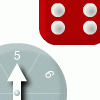
Dice and spinners interactive
Simple dice and spinners tool for experiments.
-
 interactivityFavourite
Cuisenaire environment
Age5 to 16Challenge level
An environment which simulates working with Cuisenaire rods.
-
 interactivityFavourite
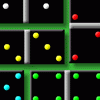
Dominoes environment
Age5 to 16Challenge level
These interactive dominoes can be dragged around the screen.
-
 interactivityFavourite
Tangram browser
Explore our selection of interactive tangrams. Can you use the tangram pieces to re-create each picture?
-
 interactivityFavourite
Virtual geoboard
This virtual geoboard allows you to create shapes by stretching rubber bands between pegs on the board.
-
 interactivityFavourite
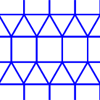
Tessellation interactivity
Age7 to 16Challenge level
An environment that enables you to investigate tessellations of regular polygons
Interactive activities
These problems and games all have interactive content, making them ideal for learners to tackle on tablets or laptops.
-
 problem
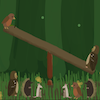
Seesaw shenanigans
Age3 to 7Challenge level
A group of animals has made a seesaw in the woods. How can you make the seesaw balance?
-
 problem
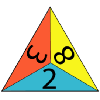
One big triangle
Age5 to 7Challenge level
Make one big triangle so the numbers that touch on the small triangles add to 10.
-
 problem
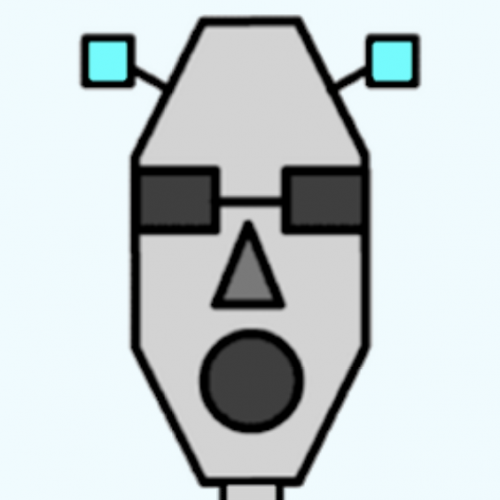
Robot monsters
Age5 to 7Challenge level
Use these head, body and leg pieces to make Robot Monsters which are different heights.
-
 problem
Cuisenaire counting
Age5 to 7Challenge level
Here are some rods that are different colours. How could I make a yellow rod using white and red rods?
-
 problem
Same length trains
Age5 to 7Challenge level
How many trains can you make which are the same length as Matt's and Katie's, using rods that are identical?
-
 problem
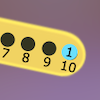
Are you well balanced?
Age5 to 7Challenge level
Can you work out how to make each side of this balance equally balanced? You can put more than one weight on a hook.
-

-
 problem
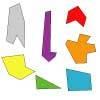
Sizing them up
Age5 to 7Challenge level
Can you put these shapes in order of size? Start with the smallest.
-
 problem
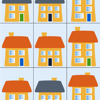
Sort the street
Age5 to 7Challenge level
Sort the houses in my street into different groups. Can you do it in any other ways?
-
 problem
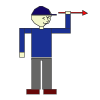
Turning man
Age5 to 7Challenge level
Use the interactivity to find out how many quarter turns the man must rotate through to look like each of the pictures.
-
 problem
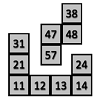
100 square jigsaw
Age5 to 7Challenge level
Can you complete this jigsaw of the 100 square?
-
 problem
Matching triangles
Age5 to 7Challenge level
Can you sort these triangles into three different families and explain how you did it?
-
 problem
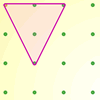
Inside triangles
Age5 to 7Challenge level
How many different triangles can you draw which each have one dot in the middle?
-
 problem
Repeating patterns
Age5 to 7Challenge level
Try continuing these patterns made from triangles. Can you create your own repeating pattern?
-
 problem
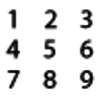
Two-digit targets
Age5 to 7Challenge level
You have a set of the digits from 0 to 9. Can you arrange these in the five boxes to make two-digit numbers as close to the targets as possible?
-
 problem
Matching time
Age5 to 7Challenge level
Try this matching game which will help you recognise different ways of saying the same time interval.
-
 problem
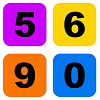
Always, sometimes or never? KS1
Age5 to 7Challenge level
Are these statements relating to calculation and properties of shapes always true, sometimes true or never true?
-
 problem
Tables teaser
Age5 to 7Challenge level
How will you work out which numbers have been used to create this multiplication square?
-
 problem
Equivalent pairs
Age5 to 7Challenge level
Can you match pairs of cards which show the same amount?
-
 problem
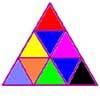
Colouring triangles
Age5 to 7Challenge level
Explore ways of colouring this set of triangles. Can you make symmetrical patterns?
-
 problem
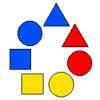
Chain of changes
Age5 to 7Challenge level
In this activity, shapes can be arranged by changing either the colour or the shape each time. Can you find a way to do it?
-

-
 problem
Three ball line up
Age5 to 7Challenge level
Use the interactivity to help get a feel for this problem and to find out all the possible ways the balls could land.
-
 problem
Find the difference
Age5 to 7Challenge level
Place the numbers 1 to 6 in the circles so that each number is the difference between the two numbers just below it.
-
 problem
Light the lights
Age5 to 7Challenge level
Investigate which numbers make these lights come on. What is the smallest number you can find that lights up all the lights?
-
 problem
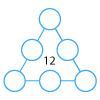
Number round up
Age5 to 7Challenge level
Arrange the numbers 1 to 6 in each set of circles below. The sum of each side of the triangle should equal the number in its centre.
-
 problem
Tangram tangle
Age5 to 7Challenge level
If you split the square into these two pieces, it is possible to fit the pieces together again to make a new shape. How many new shapes can you make?
-
 problem
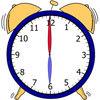
Stop the clock
Age5 to 7Challenge level
This is a game for two players. Can you find out how to be the first to get to 12 o'clock?
-
 problem
Four triangles puzzle
Age5 to 11Challenge level
Cut four triangles from a square as shown in the picture. How many different shapes can you make by fitting the four triangles back together?
-
 problem
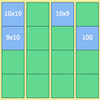
Multiplication tables - matching cards
Age5 to 11Challenge level
Practise your tables skills and try to beat your previous best score in this interactive game.
-
 problem
Growing garlic
Age5 to 11Challenge level
Ben and his mum are planting garlic. Can you find out how many cloves of garlic they might have had?
-
 problem
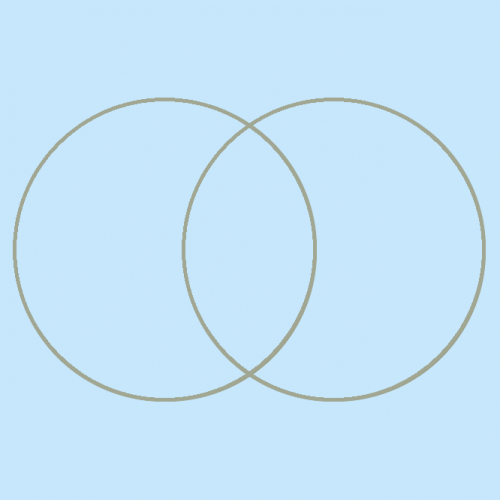
Venn diagrams
Age5 to 11Challenge level
How will you complete these interactive Venn diagrams?
-
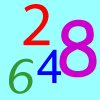 problem
Largest even
Age5 to 11Challenge level
How would you create the largest possible two-digit even number from the digit I've given you and one of your choice?
-
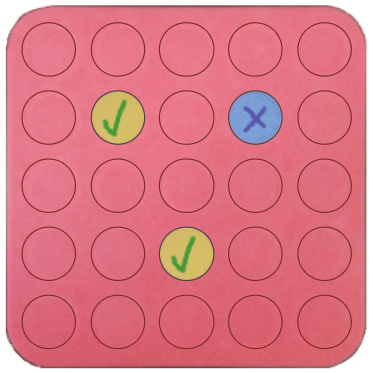 problem
Poly plug rectangles
Age5 to 11Challenge level
The computer has made a rectangle and will tell you the number of spots it uses in total. Can you find out where the rectangle is?
-
 problem
Seeing squares
Age5 to 11Challenge level
Players take it in turns to choose a dot on the grid. The winner is the first to have four dots that can be joined to form a square.
-
 problem
Carroll diagrams
Age5 to 11Challenge level
Use the interactivities to fill in these Carroll diagrams. How do you know where to place the numbers?
-
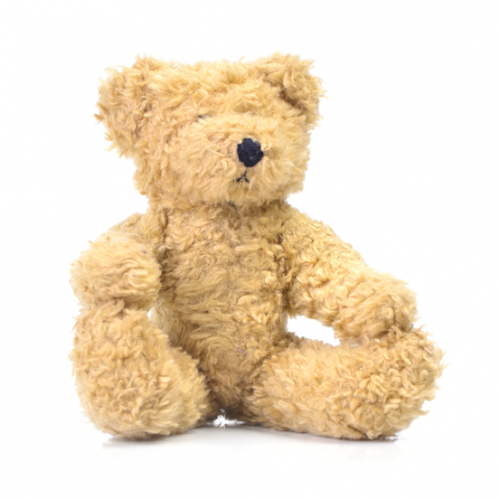 problem
Teddy Town
Age5 to 11Challenge level
There are nine teddies in Teddy Town - three red, three blue and three yellow. There are also nine houses, three of each colour. Can you put them on the map of Teddy Town according to the rules?
-
 problem
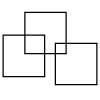
Three squares
Age5 to 11Challenge level
What is the greatest number of squares you can make by overlapping three squares?
-
 problem
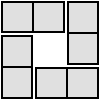
4 dom
Age5 to 11Challenge level
Use these four dominoes to make a square that has the same number of dots on each side.