Snail One Hundred
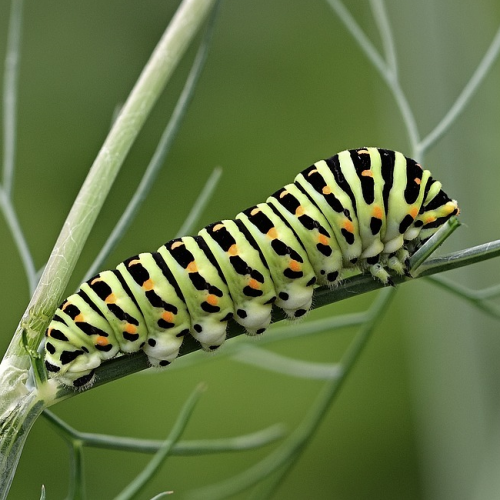
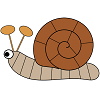
In this game, you throw a dice and move counters along the snail's body and in a spiral around the snail's shell. It is about understanding tens and ones.

This is part of our collection of favourite rich tasks arranged by topic.
If you are a teacher, you can find the whole collection on our Primary Curriculum teacher page.
Alternatively, if you are a student, you'll find the same problems on our Primary Curriculum student page.
In this game, you throw a dice and move counters along the snail's body and in a spiral around the snail's shell. It is about understanding tens and ones.

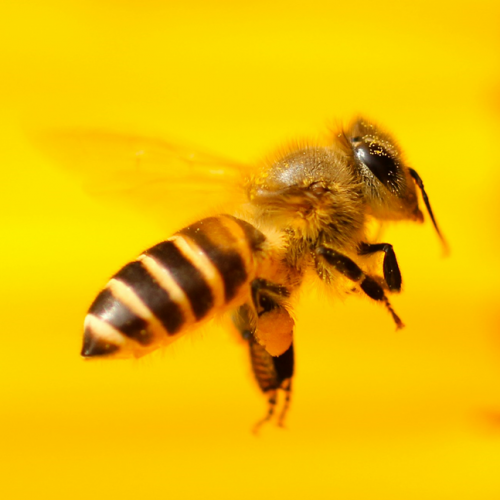
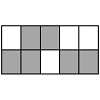
Buzzy Bee was building a honeycomb. She decorated the honeycomb with a pattern using numbers. Can you discover Buzzy's pattern and fill in the empty cells for her?
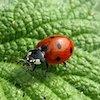
Some children were playing a game. Make a graph or picture to show how many ladybirds each child had.
Can you use the numbers on the dice to reach your end of the number line before your partner beats you?
This activity is best done with a whole class or in a large group. Can you match the cards? What happens when you add pairs of the numbers together?
Mr Gilderdale is playing a game with his class. What rule might he have chosen? How would you test your idea?
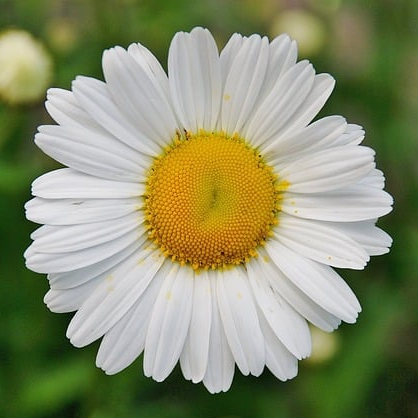
Daisy and Akram have made some number patterns. Can you find out which pattern is longer?
Use five steps to count forwards or backwards in 1s or 10s to get to 50. What strategies did you use?
How could you estimate the number of pencils/pens in these pictures?
Lee was writing all the counting numbers from 1 to 20. She stopped for a rest after writing seventeen digits. What was the last number she wrote?
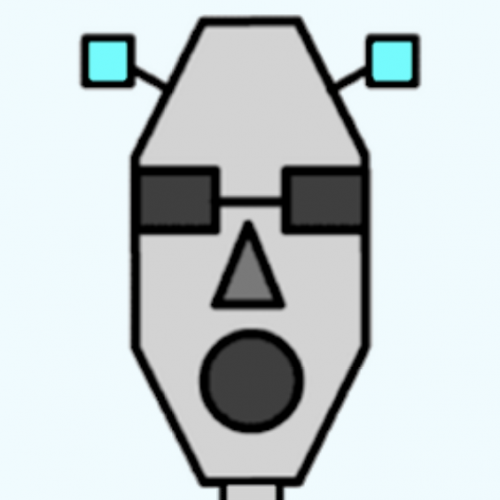
Use these head, body and leg pieces to make Robot Monsters which are different heights.
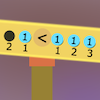
Can you hang weights in the right place to make the the number balance balanced?
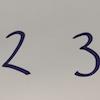
Can you each work out the number on your card? What do you notice? How could you sort the cards?
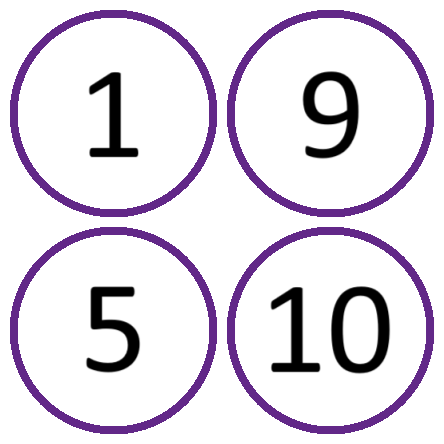
If you have ten counters numbered 1 to 10, how many can you put into pairs that add to 10? Which ones do you have to leave out? Why?
There are three versions of this challenge. The idea is to change the colour of all the spots on the grid. Can you do it in fewer throws of the dice?
Try some throwing activities and see whether you can throw something as far as the Olympic hammer or discus throwers.
What do you see as you watch this video? Can you create a similar video for the number 12?
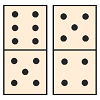
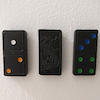
Can you work out the domino pieces which would go in the middle in each case to complete the pattern of these eight sets of three dominoes?
Jack's mum bought some candles to use on his birthday cakes and when his sister was born, she used them on her cakes too. Can you use the information to find out when Kate was born?
These caterpillars have 16 parts. What different shapes do they make if each part lies in the small squares of a 4 by 4 square?
Investigate which numbers make these lights come on. What is the smallest number you can find that lights up all the lights?
How many legs do each of these creatures have? How many pairs is that?
In this problem it is not the squares that jump, you do the jumping! The idea is to go round the track in as few jumps as possible.
Kimie and Sebastian were making sticks from interlocking cubes and lining them up. Can they make their lines the same length? Can they make any other lines?
As you come down the ladders of the Tall Tower you collect useful spells. Which way should you go to collect the most spells?
"Ip dip sky blue! Who's 'it'? It's you!" Where would you position yourself so that you are 'it' if there are two players? Three players ...?
Sweets are given out to party-goers in a particular way. Investigate the total number of sweets received by people sitting in different positions.
How would you create the largest possible two-digit even number from the digit I've given you and one of your choice?
What happens when you add three numbers together? Will your answer be odd or even? How do you know?
An activity centred around observations of dots and how we visualise number arrangement patterns.
Exploring the structure of a number square: how quickly can you put the number tiles in the right place on the grid?
Use the interactivities to fill in these Carroll diagrams. How do you know where to place the numbers?
Have a look at these photos of different fruit. How many do you see? How did you count?
This problem challenges you to find out how many odd numbers there are between pairs of numbers. Can you find a pair of numbers that has four odds between them?