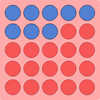
The voting station
This task encourages children to count and compare numbers when using 'voting bricks' to vote for a book at story time.
Children use everyday language to talk about time, to compare quantities and to solve problems
Children use everyday language to talk about size, to compare quantities and objects and to solve problems
In this article for practitioners, Cath Gripton and Deliah Pawluch explore the 'counting collections' approach, which encourages children to spend time playing and experimenting with counting.
In this activity, children are encouraged to follow familiar and new routes, and to create their own maps.
As children move around an obstacle course, adults can model positional language, encourage children to describe their movement themselves and create their own course.
Ruth Trundley outlines her doctoral research and concludes that development of an understanding of cardinality is a crucial element of counting that can be overlooked.
What do you see as you watch this video? Can you create a similar video for the number 12?
Lee was writing all the counting numbers from 1 to 20. She stopped for a rest after writing seventeen digits. What was the last number she wrote?