Let's Investigate Triangles
Vincent and Tara are making triangles with the class construction set. They have a pile of strips of different lengths. How many different triangles can they make?

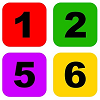
What do you notice about these squares of numbers? What is the same? What is different?
If you count from 1 to 20 and clap more loudly on the numbers in the two times table, as well as saying those numbers loudly, which numbers will be loud?
Mr Gilderdale is playing a game with his class. What rule might he have chosen? How would you test your idea?
These spinners will give you the tens and unit digits of a number. Can you choose sets of numbers to collect so that you spin six numbers belonging to your sets in as few spins as possible?
This challenge invites you to create your own picture using just straight lines. Can you identify shapes with the same number of sides and decorate them in the same way?
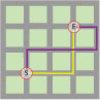
Two children made up a game as they walked along the garden paths. Can you find out their scores? Can you find some paths of your own?
Create a pattern on the small grid. How could you extend your pattern on the larger grid?
Shapes are added to other shapes. Can you see what is happening? What is the rule?
This box does something to the numbers that go into it. If you know the numbers that come out, what might be going on inside the box?
This investigates one particular property of number by looking closely at an example of adding two odd numbers together.
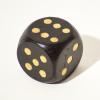
What two-digit numbers can you make with these two dice? What can't you make?
This challenge is about finding the difference between numbers which have the same tens digit.
Use five steps to count forwards or backwards in 1s or 10s to get to 50. What strategies did you use?
Throw the dice and decide whether to double or halve the number. Will you be the first to reach the target?
Here is a selection of different shapes. Can you work out which ones are triangles, and why?
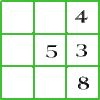
Choose four of the numbers from 1 to 9 to put in the squares so that the differences between joined squares are odd.
Investigate which numbers make these lights come on. What is the smallest number you can find that lights up all the lights?
Frances and Rishi were given a bag of lollies. They shared them out evenly and had one left over. How many lollies could there have been in the bag?
If there are 3 squares in the ring, can you place three different numbers in them so that their differences are odd? Try with different numbers of squares around the ring. What do you notice?
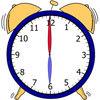
This is a game for two players. Can you find out how to be the first to get to 12 o'clock?
In how many different ways can you break up a stick of seven interlocking cubes? Now try with a stick of eight cubes and a stick of six cubes. What do you notice?
Ben and his mum are planting garlic. Can you find out how many cloves of garlic they might have had?
Use your addition and subtraction skills, combined with some strategic thinking, to beat your partner at this game.
"Ip dip sky blue! Who's 'it'? It's you!" Where would you position yourself so that you are 'it' if there are two players? Three players ...?
Sweets are given out to party-goers in a particular way. Investigate the total number of sweets received by people sitting in different positions.
How would you create the largest possible two-digit even number from the digit I've given you and one of your choice?
The computer has made a rectangle and will tell you the number of spots it uses in total. Can you find out where the rectangle is?