Growing Rectangles
What happens to the area and volume of 2D and 3D shapes when you enlarge them?
If you can copy a network without lifting your pen off the paper and without drawing any line twice, then it is traversable. Decide which of these diagrams are traversable.
In 15 years' time my age will be the square of my age 15 years ago. Can you work out my age, and when I had other special birthdays?
Is there a relationship between the coordinates of the endpoints of a line and the number of grid squares it crosses?
Here are two games you can play. Which offers the better chance of winning?
Two ladders are propped up against facing walls. At what height do the ladders cross?
An equilateral triangle rotates around regular polygons and produces an outline like a flower. What are the perimeters of the different flowers?
If everyone in your class picked a number from 1 to 225, do you think any two people would pick the same number?
Which is bigger, n+10 or 2n+3? Can you find a good method of answering similar questions?
Can you find the values at the vertices when you know the values on the edges of these multiplication arithmagons?
In this follow-up to the problem Odds and Evens, we invite you to analyse a probability situation in order to find the general solution for a fair game.
What is special about the difference between squares of numbers adjacent to multiples of three?
There are unexpected discoveries to be made about square numbers...
What is the largest number which, when divided into these five numbers in turn, leaves the same remainder each time?
Take any prime number greater than 3 , square it and subtract one. Working on the building blocks will help you to explain what is special about your results.
Can you find the area of a parallelogram defined by two vectors?
The diagonals of a trapezium divide it into four parts. Can you create a trapezium where three of those parts are equal in area?
Can you work out the probability of winning the Mathsland National Lottery?
Charlie likes to go for walks around a square park, while Alison likes to cut across diagonally. Can you find relationships between the vectors they walk along?
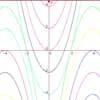
The illustration shows the graphs of fifteen functions. Two of them have equations $y=x^2$ and $y=-(x-4)^2$. Find the equations of all the other graphs.
Starting with two basic vector steps, which destinations can you reach on a vector walk?
Watch the video to see how to sum the sequence. Can you adapt the method to sum other sequences?
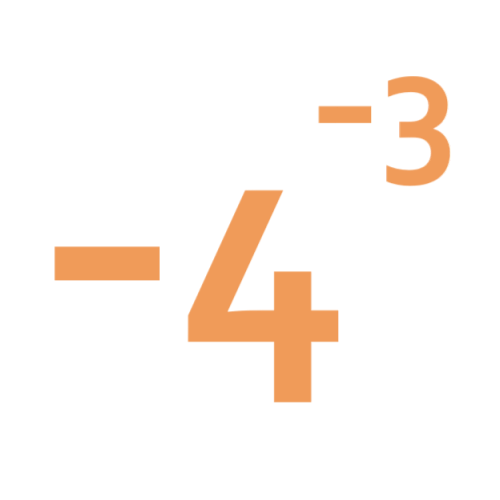
What does this number mean? Which order of 1, 2, 3 and 4 makes the highest value? Which makes the lowest?
Can you work out the equations of the trig graphs I used to make my pattern?