

game
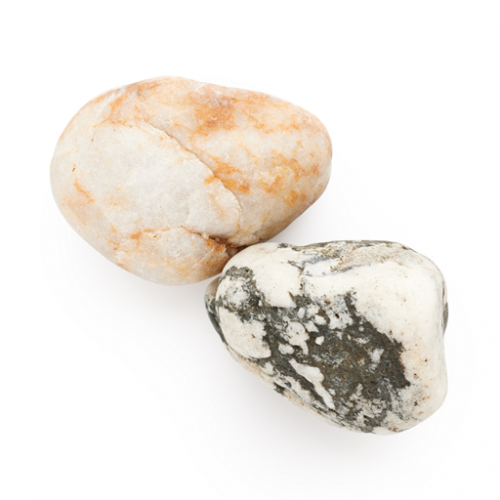
Two Stones
This game is known as Pong hau k'i in China and Ou-moul-ko-no in Korea. Why not challenge a friend to play it with you?
These hands-on activities are ideal for students aged 14-16 to explore in maths clubs.
This game is known as Pong hau k'i in China and Ou-moul-ko-no in Korea. Why not challenge a friend to play it with you?


 1 out of 3
A game in which players take it in turns to choose a number. Can you block your opponent?
 1 out of 3
Can you visualise whether these nets fold up into 3D shapes? Watch the videos each time to see if you were correct.
 1 out of 3
In this interactivity each fruit has a hidden value. Can you deduce what each one is worth?
 1 out of 3
How much can you read into a T-shirt?
 2 out of 3
Everthing you have always wanted to do with dominoes! Some of these games are good for practising your mental calculation skills, and some are good for your reasoning skills.
 2 out of 3
A game for 2 players with similarities to NIM. Place one counter on each spot on the games board. Players take it is turns to remove 1 or 2 adjacent counters. The winner picks up the last counter.
 2 out of 3
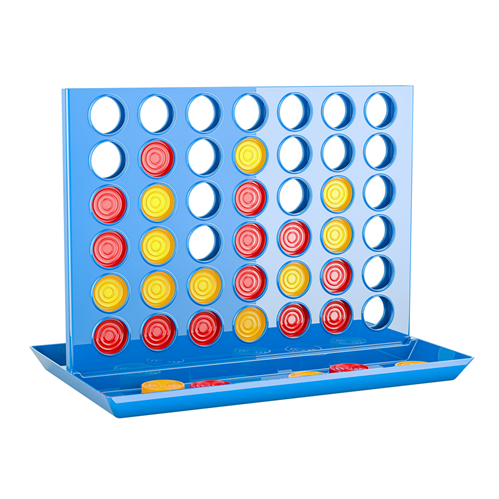
A game for 2 players. Take turns to place a counter so that it occupies one of the lowest possible positions in the grid. The first player to complete a line of 4 wins.
 2 out of 3
Place the numbers 1, 2, 3,..., 9 one on each square of a 3 by 3 grid so that all the rows and columns add up to a prime number. How many different solutions can you find?
 2 out of 3
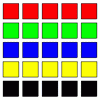
Can you put the 25 coloured tiles into the 5 × 5 square so that no column, no row and no diagonal line have tiles of the same colour in them?
 3 out of 3
An ordinary set of dominoes can be laid out as a 7 by 4 magic rectangle in which all the spots in all the columns add to 24, while those in the rows add to 42. Try it! Now try the magic square...
 3 out of 3
Using the 8 dominoes, can you make a square where each of the columns and rows adds up to 8?
 3 out of 3
How many solutions can you find to this sum? Each of the different letters stands for a different number.

Take a look at the video showing areas of different shapes on dotty grids...

 1 out of 3
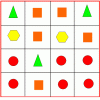
There are lots of different methods to find out what the shapes are worth - how many can you find?
 1 out of 3
Players take it in turns to choose a dot on the grid. The winner is the first to have four dots that can be joined to form a square.
 1 out of 3
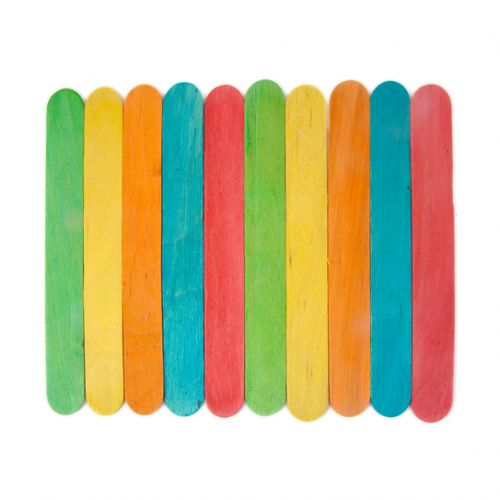
Take ten sticks in heaps any way you like. Make a new heap using one from each of the heaps. By repeating that process could the arrangement 7 - 1 - 1 - 1 ever turn up, except by starting with it?
 1 out of 3
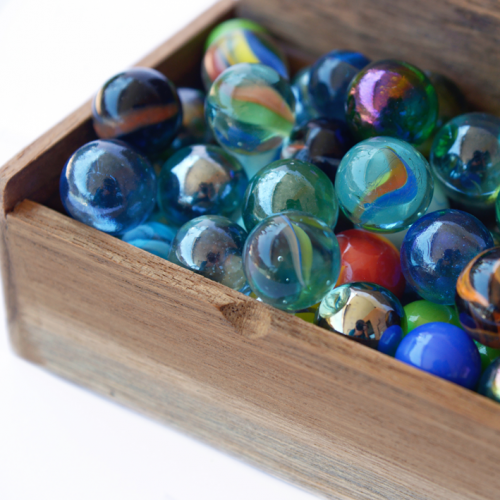
Here is a machine with four coloured lights. Can you develop a strategy to work out the rules controlling each light?
 2 out of 3
How many winning lines can you make in a three-dimensional version of noughts and crosses?
 2 out of 3
Caroline and James pick sets of five numbers. Charlie tries to find three that add together to make a multiple of three. Can they stop him?
 2 out of 3
If you can copy a network without lifting your pen off the paper and without drawing any line twice, then it is traversable. Decide which of these diagrams are traversable.
 2 out of 3
The clues for this Sudoku are the product of the numbers in adjacent squares.
 2 out of 3
In this game the winner is the first to complete a row of three. Are some squares easier to land on than others?