Explaining, convincing and proving

  • Euler's Formula and Topology
    article

    Euler's formula and topology

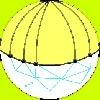
    Here is a proof of Euler's formula in the plane and on a sphere together with projects to explore cases of the formula for a polygon with holes, for the torus and other solids with holes and the relationship between Euler's formula and angle deficiency of polyhedra.

  • To Prove or Not to Prove
    article

    To prove or not to prove

    A serious but easily readable discussion of proof in mathematics with some amusing stories and some interesting examples.
  • A computer program to find magic squares
    article

    A computer program to find magic squares

    This follows up the 'magic Squares for Special Occasions' article which tells you you to create a 4by4 magicsquare with a special date on the top line using no negative numbers and no repeats.
  • An Alphanumeric
    article

    An alphanumeric

    Freddie Manners, of Packwood Haugh School in Shropshire solved an alphanumeric without using the extra information supplied and this article explains his reasoning.
  • Volume of a Pyramid and a Cone
    article

    Volume of a pyramid and a cone

    These formulae are often quoted, but rarely proved. In this article, we derive the formulae for the volumes of a square-based pyramid and a cone, using relatively simple mathematical concepts.
  • Mouhefanggai
    article

    Mouhefanggai

    Imagine two identical cylindrical pipes meeting at right angles and think about the shape of the space which belongs to both pipes. Early Chinese mathematicians call this shape the mouhefanggai.
  • Powerful properties
    article

    Powerful properties

    Yatir from Israel wrote this article on numbers that can be written as $ 2^n-n $ where n is a positive integer.
  • con Tricks
    article

    Con tricks

    Here are some examples of 'cons', and see if you can figure out where the trick is.
  • Euclid's Algorithm II
    article

    Euclid's algorithm II

    We continue the discussion given in Euclid's Algorithm I, and here we shall discover when an equation of the form ax+by=c has no solutions, and when it has infinitely many solutions.