Polynomial functions and their roots

  • Telescoping Functions
    article

    Telescoping functions

    Take a complicated fraction with the product of five quartics top and bottom and reduce this to a whole number. This is a numerical example involving some clever algebra.
  • An Introduction to Galois Theory
    article

    An introduction to Galois theory

    This article only skims the surface of Galois theory and should probably be accessible to a 17 or 18 year old school student with a strong interest in mathematics.

  • The why and how of substitution
    article

    The why and how of substitution

    Step back and reflect! This article reviews techniques such as substitution and change of coordinates which enable us to exploit underlying structures to crack problems.

  • Two Cubes
    problem

    Two cubes

    Age
    14 to 16
    Challenge level
    filled star empty star empty star
    Two cubes, each with integral side lengths, have a combined volume equal to the total of the lengths of their edges. How big are the cubes? [If you find a result by 'trial and error' you'll need to prove you have found all possible solutions.]
  • Polynomial Relations
    problem

    Polynomial relations

    Age
    16 to 18
    Challenge level
    filled star empty star empty star
    Given any two polynomials in a single variable it is always possible to eliminate the variable and obtain a formula showing the relationship between the two polynomials. Try this one.
  • Common Divisor
    problem

    Common divisor

    Age
    14 to 16
    Challenge level
    filled star empty star empty star
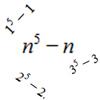
    Find the largest integer which divides every member of the following sequence: 1^5-1, 2^5-2, 3^5-3, ... n^5-n.
  • Symmetrically So
    problem

    Symmetrically so

    Age
    16 to 18
    Challenge level
    filled star empty star empty star
    Exploit the symmetry and turn this quartic into a quadratic.
  • Real(ly) numbers
    problem

    Real(ly) numbers

    Age
    16 to 18
    Challenge level
    filled star filled star empty star
    If x, y and z are real numbers such that: x + y + z = 5 and xy + yz + zx = 3. What is the largest value that any of the numbers can have?
  • Janusz asked
    problem

    Janusz asked

    Age
    16 to 18
    Challenge level
    filled star filled star empty star
    In y = ax +b when are a, -b/a, b in arithmetic progression. The polynomial y = ax^2 + bx + c has roots r1 and r2. Can a, r1, b, r2 and c be in arithmetic progression?
  • More Polynomial Equations
    problem

    More polynomial equations

    Age
    16 to 18
    Challenge level
    filled star filled star empty star
    Find relationships between the polynomials a, b and c which are polynomials in n giving the sums of the first n natural numbers, squares and cubes respectively.