Explaining, convincing and proving

  • Particularly general
    problem

    Particularly General

    Age
    16 to 18
    Challenge level
    2 out of 3

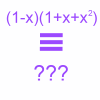
    By proving these particular identities, prove the existence of general cases.

  • Euler meets Schlegel
    problem

    Euler Meets Schlegel

    Age
    16 to 18
    Challenge level
    2 out of 3

    Discover how networks can be used to prove Euler's Polyhedron formula.

  • Amicable Arrangements
    problem

    Amicable Arrangements

    Age
    16 to 18
    Challenge level
    2 out of 3

    Three of Santa's elves and their best friends are sitting down to a festive feast. Can you find the probability that each elf sits next to their bestie?

  • Exponential intersection
    problem

    Exponential Intersection

    Age
    16 to 18
    Challenge level
    3 out of 3

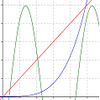
    Can the pdfs and cdfs of an exponential distribution intersect?

  • Rational Roots
    problem

    Rational Roots

    Age
    16 to 18
    Challenge level
    3 out of 3

    Given that a, b and c are natural numbers show that if sqrt a+sqrt b is rational then it is a natural number. Extend this to 3 variables.

  • Target Six
    problem

    Target Six

    Age
    16 to 18
    Challenge level
    3 out of 3

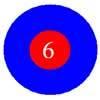
    Show that x = 1 is a solution of the equation x^(3/2) - 8x^(-3/2) = 7 and find all other solutions.

  • Rational Round
    problem

    Rational Round

    Age
    16 to 18
    Challenge level
    3 out of 3

    Show that there are infinitely many rational points on the unit circle and no rational points on the circle x^2+y^2=3.

  • Modular Fractions
    problem

    Modular Fractions

    Age
    16 to 18
    Challenge level
    3 out of 3

    We only need 7 numbers for modulus (or clock) arithmetic mod 7 including working with fractions. Explore how to divide numbers and write fractions in modulus arithemtic.

  • Poly Fibs
    problem

    Poly Fibs

    Age
    16 to 18
    Challenge level
    3 out of 3

    A sequence of polynomials starts 0, 1 and each poly is given by combining the two polys in the sequence just before it. Investigate and prove results about the roots of the polys.

  • Water Pistols
    problem

    Water Pistols

    Age
    16 to 18
    Challenge level
    3 out of 3

    With n people anywhere in a field each shoots a water pistol at the nearest person. In general who gets wet? What difference does it make if n is odd or even?