Conjecturing and generalising

  • Chord
    problem

    Chord

    Age
    16 to 18
    Challenge level
    1 out of 3

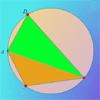
    Equal touching circles have centres on a line. From a point of this line on a circle, a tangent is drawn to the farthest circle. Find the lengths of chords where the line cuts the other circles.

  • Fibonacci Factors
    problem

    Fibonacci Factors

    Age
    16 to 18
    Challenge level
    1 out of 3

    For which values of n is the Fibonacci number fn even? Which Fibonnaci numbers are divisible by 3?

  • Least of All
    problem

    Least of All

    Age
    16 to 18
    Challenge level
    1 out of 3
    A point moves on a line segment. A function depends on the position of the point. Where do you expect the point to be for a minimum of this function to occur.
  • Patterns of inflection
    problem

    Patterns of Inflection

    Age
    16 to 18
    Challenge level
    1 out of 3

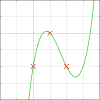
    Find the relationship between the locations of points of inflection, maxima and minima of functions.

  • Speedy summations
    problem

    Speedy Summations

    Age
    16 to 18
    Challenge level
    1 out of 3

    Watch the video to see how to add together an arithmetic sequence of numbers efficiently.

  • Ball bearings in a metal wheel.
    problem

    Ball Bearings

    Age
    16 to 18
    Challenge level
    2 out of 3

    If a is the radius of the axle, b the radius of each ball-bearing, and c the radius of the hub, why does the number of ball bearings n determine the ratio c/a? Find a formula for c/a in terms of n.

  • Polite Numbers
    problem

    Polite Numbers

    Age
    16 to 18
    Challenge level
    2 out of 3

    A polite number can be written as the sum of two or more consecutive positive integers, for example 8+9+10=27 is a polite number. Can you find some more polite, and impolite, numbers?

  • Generally Geometric
    problem

    Generally Geometric

    Age
    16 to 18
    Challenge level
    2 out of 3

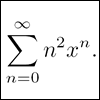
    Generalise the sum of a GP by using derivatives to make the coefficients into powers of the natural numbers.
  • Can it be?
    problem

    Can It Be?

    Age
    16 to 18
    Challenge level
    2 out of 3

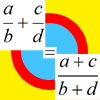
    When if ever do you get the right answer if you add two fractions by adding the numerators and adding the denominators?

  • Maximum Scattering
    problem

    Maximum Scattering

    Age
    16 to 18
    Challenge level
    2 out of 3

    Your data is a set of positive numbers. What is the maximum value that the standard deviation can take?