Conjecturing and generalising

  • Wooden cubes arranged in rows of one, three and five.
    game

    One, Three, Five, Seven

    Age
    11 to 16
    Challenge level
    3 out of 3

    A game for 2 players. Set out 16 counters in rows of 1,3,5 and 7. Players take turns to remove any number of counters from a row. The player left with the last counter looses.

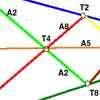
  • The Bridges of Konigsberg
    problem

    The Bridges of Konigsberg

    Age
    11 to 18
    Challenge level
    1 out of 3

    Investigate how networks can be used to solve a problem for the 18th Century inhabitants of Konigsberg.

  • What does it all add up to?
    problem

    What Does It All Add Up To?

    Age
    11 to 18
    Challenge level
    2 out of 3

    If you take four consecutive numbers and add them together, the answer will always be even. What else do you notice?

  • Loopy
    problem

    Loopy

    Age
    14 to 16
    Challenge level
    1 out of 3

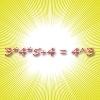
    Investigate sequences given by $a_n = \frac{1+a_{n-1}}{a_{n-2}}$ for different choices of the first two terms. Make a conjecture about the behaviour of these sequences. Can you prove your conjecture?

  • Counting Fish
    problem

    Counting Fish

    Age
    14 to 16
    Challenge level
    1 out of 3

    I need a figure for the fish population in a lake. How does it help to catch and mark 40 fish?

  • Building Gnomons
    problem

    Building Gnomons

    Age
    14 to 16
    Challenge level
    1 out of 3
    Build gnomons that are related to the Fibonacci sequence and try to explain why this is possible.
  • Equilateral Areas
    problem

    Equilateral Areas

    Age
    14 to 16
    Challenge level
    2 out of 3

    ABC and DEF are equilateral triangles of side 3 and 4 respectively. Construct an equilateral triangle whose area is the sum of the area of ABC and DEF.

  • Janine's Conjecture
    problem

    Janine's Conjecture

    Age
    14 to 16
    Challenge level
    2 out of 3

    Janine noticed, while studying some cube numbers, that if you take three consecutive whole numbers and multiply them together and then add the middle number of the three, you get the middle number. Does this always work? Can you prove or disprove this conjecture?

  • Gnomon dimensions
    problem

    Gnomon Dimensions

    Age
    14 to 16
    Challenge level
    2 out of 3
    These gnomons appear to have more than a passing connection with the Fibonacci sequence. This problem ask you to investigate some of these connections.