


Conjecturing and generalising
-
-
 problem
Sums of Pairs
Age11 to 16Challenge level
 2 out of 3
Jo has three numbers which she adds together in pairs. When she does this she has three different totals: 11, 17 and 22 What are the three numbers Jo had to start with?”
-
 problem
Circumference Angles
Age11 to 16Challenge level
2 out of 3
Can you prove the angle properties described by some of the circle theorems?
-
 game
gameOne, Three, Five, Seven
Age11 to 16Challenge level
3 out of 3
A game for 2 players. Set out 16 counters in rows of 1,3,5 and 7. Players take turns to remove any number of counters from a row. The player left with the last counter looses.
-
 problem
The Bridges of Konigsberg
Age11 to 18Challenge level
1 out of 3
Investigate how networks can be used to solve a problem for the 18th Century inhabitants of Konigsberg.
-
 problem
What Does It All Add Up To?
Age11 to 18Challenge level
2 out of 3
If you take four consecutive numbers and add them together, the answer will always be even. What else do you notice?
-
 problem
Loopy
Age14 to 16Challenge level
1 out of 3
Investigate sequences given by $a_n = \frac{1+a_{n-1}}{a_{n-2}}$ for different choices of the first two terms. Make a conjecture about the behaviour of these sequences. Can you prove your conjecture?
-
 problem
Counting Fish
Age14 to 16Challenge level
1 out of 3
I need a figure for the fish population in a lake. How does it help to catch and mark 40 fish?
-
 problem
Building Gnomons
Age14 to 16Challenge level
1 out of 3
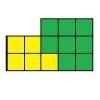
Build gnomons that are related to the Fibonacci sequence and try to explain why this is possible. -
 problem
Equilateral Areas
Age14 to 16Challenge level
2 out of 3
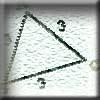
ABC and DEF are equilateral triangles of side 3 and 4 respectively. Construct an equilateral triangle whose area is the sum of the area of ABC and DEF.