Tower of Hanoi
The Tower of Hanoi is an ancient mathematical challenge. Working on the building blocks may help you to explain the patterns you notice.


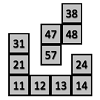
Nine squares with side lengths 1, 4, 7, 8, 9, 10, 14, 15, and 18 cm can be fitted together to form a rectangle. What are the dimensions of the rectangle?
Suggestions for worthwhile mathematical activity on the subject of angle measurement for all pupils.
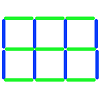
This task encourages you to investigate the number of edging pieces and panes in different sized windows.
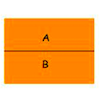
In how many ways can you halve a piece of A4 paper? How do you know they are halves?
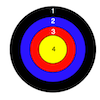
This task, written for the National Young Mathematicians' Award 2016, invites you to explore the different combinations of scores that you might get on these dart boards.
This article for teachers explains why geoboards are such an invaluable resource and introduces several tasks which make use of them.
Watch the video of Fran re-ordering these number cards. What do you notice? Try it for yourself. What happens?
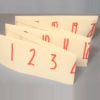
When I fold a 0-20 number line, I end up with 'stacks' of numbers on top of each other. These challenges involve varying the length of the number line and investigating the 'stack totals'.