

Shadow Play
 3 out of 3
Here are shadows of some 3D shapes. What shapes could have made them?
Problem
Here are four shadows created by four different 3D shapes (against a wall):
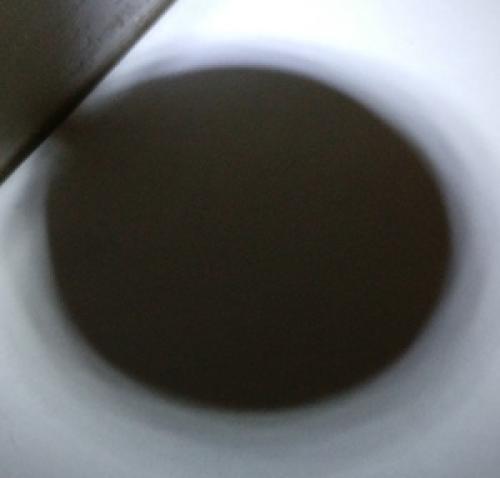
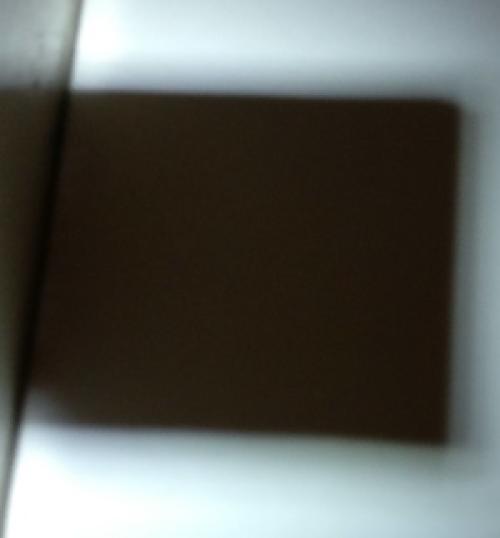
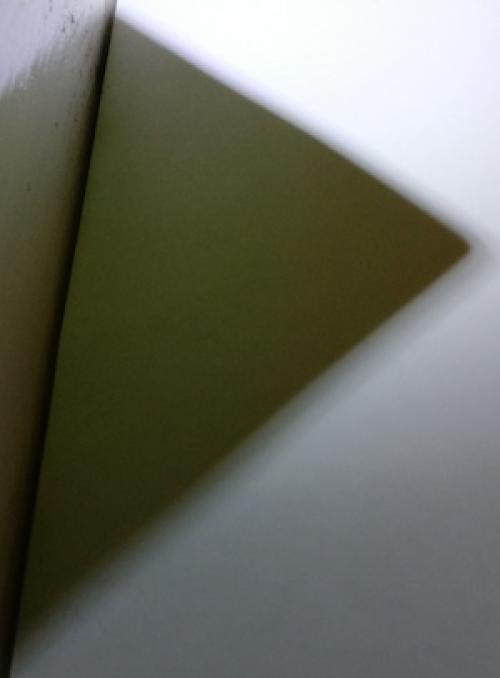

What could the 3D shapes be? How do you know?
Getting Started
There may be more than one answer for each shadow.
Think about all the solid shapes you know. Look at shapes around you, for example tin cans, sweet packets, cereal boxes, balls ...
You could check your answers by holding shapes underneath the light of an overhead projector or by using a torch - ask an adult to help you.
Student Solutions
Excellent solutions to this problem were sent in by William from All Saints, Carshalton and Ruth from Swanbourne House School.
William says that the black circle could be a sphere, hemisphere, cylinder or cone.
Ruth explains that the square could be a cube, a cuboid on its end or a square-based pyramid.
The triangle could be a triangular prism, tetrahedron, one side of any shaped pyramid or a cone according to William.
Finally, Ruth says that the rectangle could be any kind of prism, a cylinder or a cuboid. William also suggests it could be a rectangular based pyramid.
Stephen who is home educated also said that the square could be a triangular prism (with the non-triangle bits being squares) and in fact any prism with square faces.
Thomas and Nathan from Our Lady and St Werburg; Ebony, Lucy and Carys from Eaton Park Primary and Armitage Class from East Hoathly also sent in many of the above suggestions.
Jonathan from King David High School wrote in with some suggestions of items which could make the shadows:
The circular shape could be an enlarged smarties tube from the side.
The square shape could be the side view of a die.
The triangular shape could be a view of a tolberone box.
The rectangular shape could be a view of a biscuit box.
This is another way to look at the problem - thank you Jonathan.
Teachers' Resources
Using NRICH Tasks Richly describes ways in which teachers and learners can work with NRICH tasks in the classroom.
Why do this problem?
This problem requires learners to visualise 3D shapes, and therefore consolidates knowledge of their properties. Pupils are also reminded that there is not necessarily just one answer in mathematics! Recognising that there may be more than one solution to a problem is part of having a flexible approach, which you can read more about in our Let's Get Flexible with Geometry article.
Possible approach
It is important for children to have had lots of experience of handling and talking about 3D shapes prior to this activity, and it would be helpful to have lots of 3D shapes to hand.
You could start off the activity by choosing a particular shape and telling children that you're going to shine a torch on it so that you can see its shadow. (Alternatively, hold a shape under the light of a visualiser or overhead projector if you have one still.) Ask children what shape they think the shadow will be and why. Give them time to talk to a partner before discussing it as a whole class. You could repeat this once more with a different shape, or by shining the torch on a different face of the first shape, so that the group understands what is happening.
(It is quite tricky to create a perfect geometrical shadow while also holding the shape. The images in the problem were taken by temporarily sticking a shape to a wall. You may need to discuss this with your learners so that they appreciate which part of a shadow is being made by the shape itself and which part by another source, if applicable!)
Then show the class the pictures of the shadows in the problem and ask them to work in pairs or small groups to decide which shapes could make each shadow. You could give each group a torch to test their predictions.
In a plenary, share solutions and draw attention to those where more than one shape is possible. Are the children certain they have all the possibilities?
Key questions
What shape is this shadow?
How might that help us to find a 3D shape that made it?
Is there only one possible shape?
What could the shadow of this shape look like?
Can you explain why?
Possible extension
Learners may be able to investigate other shadow shapes and list all the 3D shapes which could make these as well.
Possible support
It would be useful for children to try Skeleton Shapes before tackling this problem.