Domino Tetrads
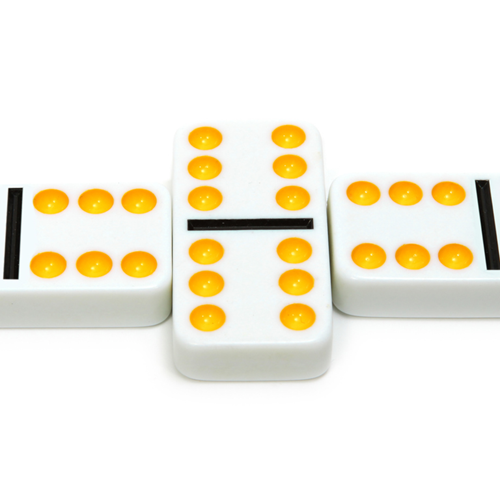
Is it possible to use all 28 dominoes arranging them in squares of four? What patterns can you see in the solution(s)?
These hands-on activities are ideal for students aged 11-14 to use in maths clubs and whole-school maths events.
Is it possible to use all 28 dominoes arranging them in squares of four? What patterns can you see in the solution(s)?
Can you find a cuboid that has a surface area of exactly 100 square units. Is there more than one? Can you find them all?
Interior angles can help us to work out which polygons will tessellate. Can we use similar ideas to predict which polygons combine to create semi-regular solids?
Take a look at the video showing areas of different shapes on dotty grids...
There are lots of different methods to find out what the shapes are worth - how many can you find?
Players take it in turns to choose a dot on the grid. The winner is the first to have four dots that can be joined to form a square.
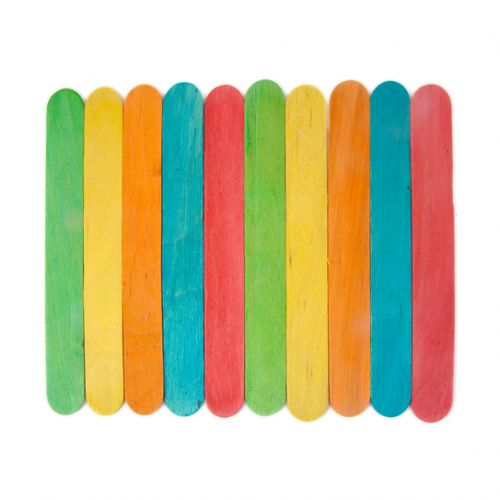
Take ten sticks in heaps any way you like. Make a new heap using one from each of the heaps. By repeating that process could the arrangement 7 - 1 - 1 - 1 ever turn up, except by starting with it?
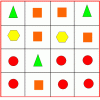
Here is a machine with four coloured lights. Can you develop a strategy to work out the rules controlling each light?
How many winning lines can you make in a three-dimensional version of noughts and crosses?
Caroline and James pick sets of five numbers. Charlie tries to find three that add together to make a multiple of three. Can they stop him?
If you can copy a network without lifting your pen off the paper and without drawing any line twice, then it is traversable. Decide which of these diagrams are traversable.
The clues for this Sudoku are the product of the numbers in adjacent squares.
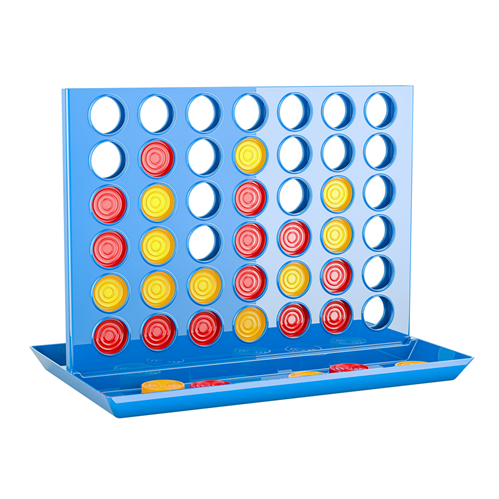
In this game the winner is the first to complete a row of three. Are some squares easier to land on than others?
A game for 2 players. Set out 16 counters in rows of 1,3,5 and 7. Players take turns to remove any number of counters from a row. The player left with the last counter looses.
Using the digits 1, 2, 3, 4, 5, 6, 7 and 8, mulitply a two two digit numbers are multiplied to give a four digit number, so that the expression is correct. How many different solutions can you find?
Can you use small coloured cubes to make a 3 by 3 by 3 cube so that each face of the bigger cube contains one of each colour?
Can you find a strategy that ensures you get to take the last biscuit in this game?
Four friends must cross a bridge. How can they all cross it in just 17 minutes?
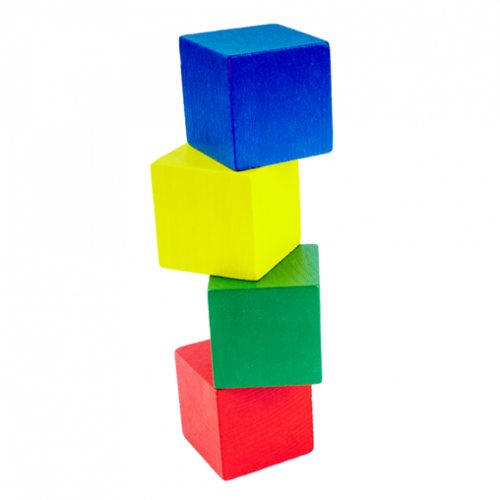
Given the nets of 4 cubes with the faces coloured in 4 colours, build a tower so that on each vertical wall no colour is repeated.