Mathsland National Lottery
Can you work out the probability of winning the Mathsland National Lottery?
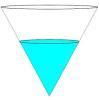
In Fill Me Up we invited you to sketch graphs as vessels are filled with water. Can you work out the equations of the graphs?
A napkin is folded so that a corner coincides with the midpoint of an opposite edge. Investigate the three triangles formed.
An observer is on top of a lighthouse. How far from the foot of the lighthouse is the horizon that the observer can see?
Here is a Sudoku with a difference! Use information about lowest common multiples to help you solve it.
A 2-digit number is squared. When this 2-digit number is reversed and squared, the difference between the squares is also a square. What is the 2-digit number?
It is impossible to trisect an angle using only ruler and compasses but it can be done using a carpenter's square.
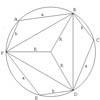
A hexagon, with sides alternately a and b units in length, is inscribed in a circle. How big is the radius of the circle?
Using a ruler, pencil and compasses only, it is possible to construct a square inside any triangle so that all four vertices touch the sides of the triangle.
What is the same and what is different about these circle questions? What connections can you make?
Infographics are a powerful way of communicating statistical information. Can you come up with your own?
Watch the video to see how to sum the sequence. Can you adapt the method to sum other sequences?
What do you get when you raise a quadratic to the power of a quadratic?
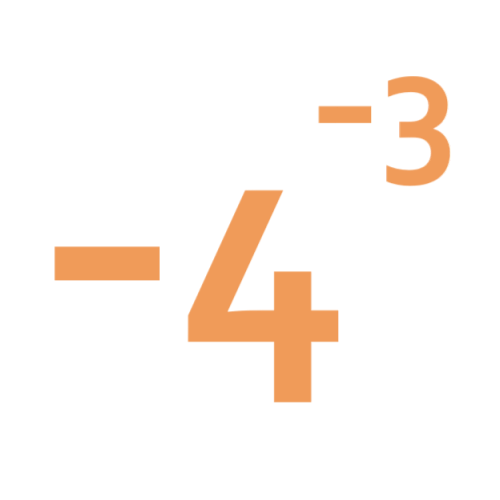
What does this number mean? Which order of 1, 2, 3 and 4 makes the highest value? Which makes the lowest?
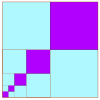
Can you make sense of the three methods to work out what fraction of the total area is shaded?
Take a triangular number, multiply it by 8 and add 1. What is special about your answer? Can you prove it?
Show that if you add 1 to the product of four consecutive numbers the answer is ALWAYS a perfect square.
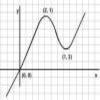
This problem challenges you to find cubic equations which satisfy different conditions.
10 graphs of experimental data are given. Can you use a spreadsheet to find algebraic graphs which match them closely, and thus discover the formulae most likely to govern the underlying processes?
There are many different methods to solve this geometrical problem - how many can you find?
Do you have enough information to work out the area of the shaded quadrilateral?
Stick some cubes together to make a cuboid. Find two of the angles by as many different methods as you can devise.