problem
Favourite
Sine and Cosine
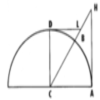
The sine of an angle is equal to the cosine of its complement. Can
you explain why and does this rule extend beyond angles of 90
degrees?
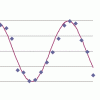
10 graphs of experimental data are given. Can you use a spreadsheet to find algebraic graphs which match them closely, and thus discover the formulae most likely to govern the underlying processes?
Can you work out which processes are represented by the graphs?
Can you work out the equations of the trig graphs I used to make my pattern?