Explaining, convincing and proving

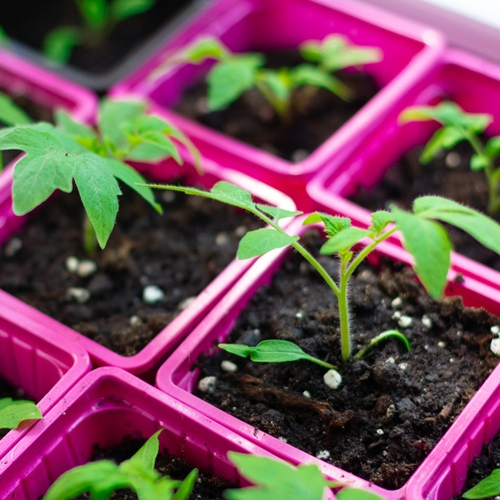
  • Small tomato seedlings in pink pots.
    problem

    Honey Bees

    Age
    14 to 16
    Challenge level
    1 out of 3

    How many bees could fly 1000 miles if they had 10 gallons of honey?

  • Small pepper seedlings in turquoise pots.
    problem

    Hiking the Hill

    Age
    14 to 16
    Challenge level
    1 out of 3

    Sarah's average speed for a journey was 2 mph, and her return average speed was 4 mph. What is her average speed for the whole journey?

  • Small pepper seedlings in turquoise pots.
    problem

    The London Eye

    Age
    14 to 16
    Challenge level
    1 out of 3

    The 80 spokes of The London Eye are made from 4 miles of cable. What is the approximate circumference of the wheel?

  • Small tomato seedlings in pink pots.
    problem

    Peter's Primes

    Age
    14 to 16
    Challenge level
    1 out of 3

    Peter wrote a list of all the numbers that can be formed by changing one digit of the number 200. How many of Peter's numbers are prime?

  • Different Products
    problem

    Different Products

    Age
    14 to 16
    Challenge level
    1 out of 3

    Take four consecutive whole numbers. Multiply the first and last numbers together. Multiply the middle pair together. What do you notice?

  • Proximity
    problem

    Proximity

    Age
    14 to 16
    Challenge level
    2 out of 3

    We are given a regular icosahedron having three red vertices. Show that it has a vertex that has at least two red neighbours.

  • Gift of Gems
    problem

    Gift of Gems

    Age
    14 to 16
    Challenge level
    2 out of 3

    Four jewellers share their stock. Can you work out the relative values of their gems?

  • Long Short
    problem

    Long Short

    Age
    14 to 16
    Challenge level
    2 out of 3

    What can you say about the lengths of the sides of a quadrilateral whose vertices are on a unit circle?

  • Converse
    problem

    Converse

    Age
    14 to 16
    Challenge level
    2 out of 3

    Clearly if a, b and c are the lengths of the sides of an equilateral triangle then a^2 + b^2 + c^2 = ab + bc + ca. Is the converse true?