Part 3: Everybody Is Different
Julia refines our model, and the interactivity offers a chance to simulate the outbreak of an infectious disease, recognising that not everyone is the same.
Where can you draw a line on a clock face so that the numbers on both sides have the same total?
Explore the properties of some groups such as: The set of all real numbers excluding -1 together with the operation x*y = xy + x + y. Find the identity and the inverse of the element x.
Show that for any triangle it is always possible to construct 3 touching circles with centres at the vertices. Is it possible to construct touching circles centred at the vertices of any polygon?
Imagine we have four bags containing a large number of 1s, 4s, 7s and 10s. What numbers can we make?
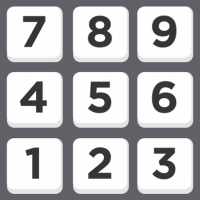
Charlie and Abi put a counter on 42. They wondered if they could visit all the other numbers on their 1-100 board, moving the counter using just these two operations: ×2 and -5. What do you think?
The Man is much smaller than us. Can you use the picture of him next to a mug to estimate his height and how much tea he drinks?
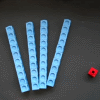
Ahmed is making rods using different numbers of cubes. Which rod is twice the length of his first rod?