You Never Get a Six
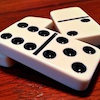
Charlie thinks that a six comes up less often than the other numbers on the dice. Have a look at the results of the test his class did to see if he was right.


Tim had nine cards each with a different number from 1 to 9 on it. How could he have put them into three piles so that the total in each pile was 15?
In this article for Early Years practitioners, Dr Sue Gifford outlines ways to develop children's problem-solving strategies and confidence in problem solving.
I'm thinking of a number. My number is both a multiple of 5 and a multiple of 6. What could my number be?
This article gives an introduction to mathematical induction, a powerful method of mathematical proof.
Bernard Bagnall recommends some primary school problems which use numbers from the environment around us, from clocks to house numbers.
Uncertain about the likelihood of unexpected events? You are not alone!