Inky Cube
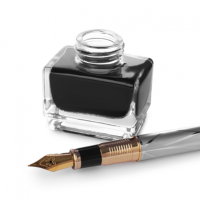
This cube has ink on each face which leaves marks on paper as it is rolled. Can you work out what is on each face and the route it has taken?
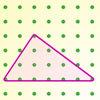
Use the interactivity to find all the different right-angled triangles you can make by just moving one corner of the starting triangle.
48 is called an abundant number because it is less than the sum of its factors (without itself). Can you find some more abundant numbers?
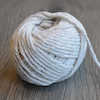
The ancient Egyptians were said to make right-angled triangles using a rope with twelve equal sections divided by knots. What other triangles could you make if you had a rope like this?
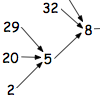
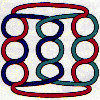
What happens when you add the digits of a number then multiply the result by 2 and you keep doing this? You could try for different numbers and different rules.
In Classical times the Pythagorean philosophers believed that all things were made up from a specific number of tiny indivisible particles called ‘monads’. Each object contained a different number of particles, and so they believed that ‘everything was number’.
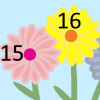
Can you find two butterflies to go on each flower so that the numbers on each pair of butterflies adds to the number on their flower?
Ayah conjectures that the diagonals of a square meet at right angles. Do you agree? How could you find out?
This practical problem challenges you to make quadrilaterals with a loop of string. You'll need some friends to help!