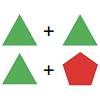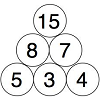
Strike It Out
Use your addition and subtraction skills, combined with some strategic thinking, to beat your partner at this game.
This activity is based on data in the book 'If the World Were a Village'. How will you represent your chosen data for maximum effect?
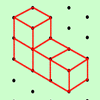
Here are four cubes joined together. How many other arrangements of four cubes can you find? Can you draw them on dotty paper?
Lolla bought a balloon at the circus. She gave the clown six coins to pay for it. What could Lolla have paid for the balloon?
The value of the circle changes in each of the following problems. Can you discover its value in each problem?
Here are the six faces of a cube - in no particular order. Here are three views of the cube. Can you deduce where the faces are in relation to each other and record them on the net of this cube?
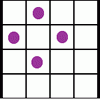
What is the greatest number of counters you can place on the grid below without four of them lying at the corners of a square?
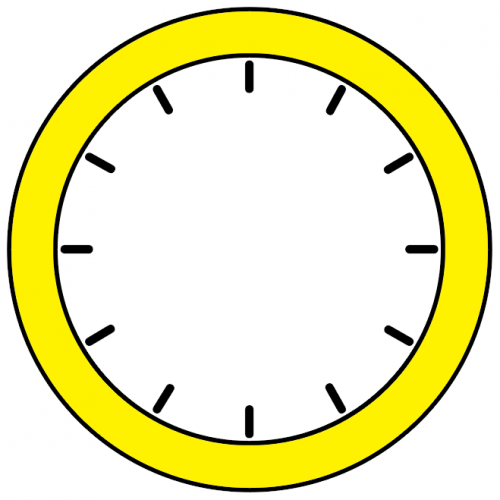
There is a clock-face where the numbers have become all mixed up. Can you find out where all the numbers have got to from these ten statements?
Have a look at this table of how children travel to school. How does it compare with children in your class?
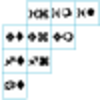
Can you predict when you'll be clapping and when you'll be clicking if you start this rhythm? How about when a friend begins a new rhythm at the same time?
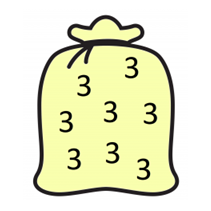
This big box multiplies anything that goes inside it by the same number. If you know the numbers that come out, what multiplication might be going on in the box?
Can you put the numbers 1-5 in the V shape so that both 'arms' have the same total?
This 100 square jigsaw is written in code. It starts with 1 and ends with 100. Can you build it up?
This group activity will encourage you to share calculation strategies and to think about which strategy might be the most efficient.
What statements can you make about the car that passes the school gates at 11am on Monday? How will you come up with statements and test your ideas?
Class 5 were looking at the first letter of each of their names. They created different charts to show this information. Can you work out which member of the class was away on that day?
This problem explores the range of events in a sports day and which ones are the most popular and attract the most entries.
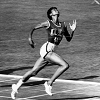
Look at some of the results from the Olympic Games in the past. How do you compare if you try some similar activities?
Can you find different ways of showing the same fraction? Try this matching game and see.
In this game the winner is the first to make the total 37. Is this a fair game?
Can you find all the ways to get 15 at the top of this triangle of numbers? Many opportunities to work in different ways.
Mandeep's watch loses two minutes every hour. Adam's watch gains one minute every hour. Can you work out what time they arrived at the airport?
These clocks have only one hand, but can you work out what time they are showing from the information?
Use your logical thinking skills to deduce how much Dan's crisps and ice cream cost altogether.
Have a look at the results for some events at past Olympic Games. Can you use these to predict the results at the next Olympics?
Investigate the different numbers of people and rats there could have been if you know how many legs there are altogether!
During the third hour after midnight the hands on a clock point in the same direction (so one hand is over the top of the other). At what time, to the nearest second, does this happen?
How could you arrange at least two dice in a stack so that the total of the visible spots is 18?
This cube has ink on each face which leaves marks on paper as it is rolled. Can you work out what is on each face and the route it has taken?