Patterns and Sequences

  • Steel Cables
    problem
    Favourite

    Steel Cables

    Age
    14 to 16
    Challenge level
    1 out of 3

    Some students have been working out the number of strands needed for different sizes of cable. Can you make sense of their solutions?

  • Double Trouble
    problem
    Favourite

    Double Trouble

    Age
    14 to 16
    Challenge level
    1 out of 3

    Simple additions can lead to intriguing results...

  • Picture Story
    problem
    Favourite

    Picture Story

    Age
    14 to 16
    Challenge level
    2 out of 3

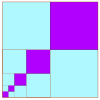
    Can you see how this picture illustrates the formula for the sum of the first six cube numbers?

  • Painted Cube
    problem
    Favourite

    Painted Cube

    Age
    14 to 16
    Challenge level
    2 out of 3

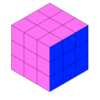
    Imagine a large cube made from small red cubes being dropped into a pot of yellow paint. How many of the small cubes will have yellow paint on their faces?

  • Mystic Rose
    problem
    Favourite

    Mystic Rose

    Age
    14 to 16
    Challenge level
    2 out of 3

    Use the animation to help you work out how many lines are needed to draw mystic roses of different sizes.

  • Partly Painted Cube
    problem
    Favourite

    Partly Painted Cube

    Age
    14 to 16
    Challenge level
    2 out of 3

    Jo made a cube from some smaller cubes, painted some of the faces of the large cube, and then took it apart again. 45 small cubes had no paint on them at all. How many small cubes did Jo use?

  • Attractive Tablecloths
    problem
    Favourite

    Attractive Tablecloths

    Age
    14 to 16
    Challenge level
    2 out of 3

    Charlie likes tablecloths that use as many colours as possible, but insists that his tablecloths have some symmetry. Can you work out how many colours he needs for different tablecloth designs?

  • Summing geometric progressions
    problem
    Favourite

    Summing Geometric Progressions

    Age
    14 to 18
    Challenge level
    1 out of 3

    Watch the video to see how to sum the sequence. Can you adapt the method to sum other sequences?