Always, Sometimes or Never? KS1
Are these statements relating to calculation and properties of shapes always true, sometimes true or never true?
Vincent and Tara are making triangles with the class construction set. They have a pile of strips of different lengths. How many different triangles can they make?
In this town, houses are built with one room for each person. There are some families of seven people living in the town. In how many different ways can they build their houses?
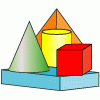
We have a box of cubes, triangular prisms, cones, cuboids, cylinders and tetrahedrons. Which of the buildings would fall down if we tried to make them?
Here are some rods that are different colours. How could I make a yellow rod using white and red rods?
Try grouping the dominoes in the ways described. Are there any left over each time? Can you explain why?
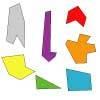
Can you put these shapes in order of size? Start with the smallest.
Can you sort these triangles into three different families and explain how you did it?
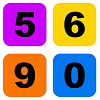
You have a set of the digits from 0 to 9. Can you arrange these in the five boxes to make two-digit numbers as close to the targets as possible?
These pictures show some different activities that you may get up to during a day. What order would you do them in?