What Could It Be?
In this calculation, the box represents a missing digit. What could the digit be? What would the solution be in each case?

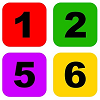
Choose four of the numbers from 1 to 9 to put in the squares so that the differences between joined squares are odd.
Investigate which numbers make these lights come on. What is the smallest number you can find that lights up all the lights?
How many legs do each of these creatures have? How many pairs is that?
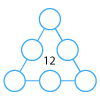
Arrange the numbers 1 to 6 in each set of circles below. The sum of each side of the triangle should equal the number in its centre.
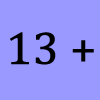
Pat counts her sweets in different groups and both times she has some left over. How many sweets could she have had?
If there are 3 squares in the ring, can you place three different numbers in them so that their differences are odd? Try with different numbers of squares around the ring. What do you notice?
Are these statements relating to odd and even numbers always true, sometimes true or never true?