

The New Puzzling Sweet Shop

 2 out of 3
There were cola bottles for 10p, mini eggs for 15p, marshmallow twists for 25p and lollipops for 35p in the sweet shop. What could each of the children buy with their money?
Problem
Rosie went into the sweet shop with 50p to spend.
There were cola bottles for 10p, mini eggs for 15p, marshmallow twists for 25p and lollipops for 35p.
| 10p | 15p | 25p | 35p |
Image
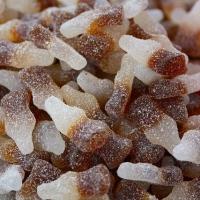
Cola bottles | Image
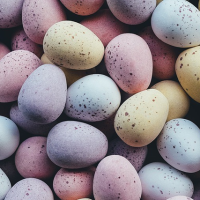
Mini eggs | Image

Marshmallow twists | Image
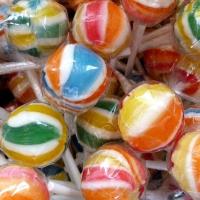
Lollipops |
What could she buy if she wanted to spend all her money?
Alice, James, Katie and Henry went into the shop too. They each had 100p to spend and they all spent all of their money.
Alice bought at least one of each kind of sweet. Which one did she have two of?
James spent his money on just one kind of sweet, but he does not like cola bottles. Which sweets did he buy?
Katie bought the same number of sweets as James but she had 3 different kinds. Which sweets did she buy?
Henry chose 8 sweets. What could he have bought?
Getting Started
Think of ways that $10$ and $20$ can be divided up.
Teachers' Resources
Using NRICH Tasks Richly describes ways in which teachers and learners can work with NRICH tasks in the classroom.
Why do this problem?
This problem presents learners with a pleasant and familiar situation in which to explore aspects of the four operations. It also relies on finding all possibilities so can be used to focus on working systematically.
Possible approach
Key questions
How do you know you have all the possibilities?
Possible extension
Learners could investigate how other amounts of money perhaps between $10$p and $20$p, could be spent exactly.
Possible support
It could be useful for children to have objects to represent the sweets, for example coloured counters. The Puzzling Sweet Shop is a version of this problem which uses smaller amounts of money.