

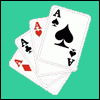
The Best Card Trick?

 1 out of 3
Time for a little mathemagic! Choose any five cards from a pack and show four of them to your partner. How can they work out the fifth?

Tournament Scheduling

Divisibility Tests
This article explains various divisibility rules and why they work. An article to read with pencil and paper handy.

All About Infinity
Infinity is not a number, and trying to treat it as one tends to be a pretty bad idea. At best you're likely to come away with a headache, at worse the firm belief that 1 = 0. This article discusses the different types of infinity.

Ding Dong Bell

The Random World
Think that a coin toss is 50-50 heads or tails? Read on to appreciate the ever-changing and random nature of the world in which we live.

Mouhefanggai
Imagine two identical cylindrical pipes meeting at right angles and think about the shape of the space which belongs to both pipes. Early Chinese mathematicians call this shape the mouhefanggai.

Some Circuits in Graph or Network Theory
Eulerian and Hamiltonian circuits are defined with some simple examples and a couple of puzzles to illustrate Hamiltonian circuits.

Whole Number Dynamics I
The first of five articles concentrating on whole number dynamics, ideas of general dynamical systems are introduced and seen in concrete cases.

Sums of Powers - A Festive Story

The Chinese Remainder Theorem
In this article we shall consider how to solve problems such as "Find all integers that leave a remainder of 1 when divided by 2, 3, and 5."

Links and Knots

Keeping It Safe and Quiet


How Many Geometries Are There?
An account of how axioms underpin geometry and how by changing one axiom we get an entirely different geometry.

Approximations, Euclid's Algorithm and Continued Fractions
This article sets some puzzles and describes how Euclid's algorithm and continued fractions are related.

Mathematics in the Financial Markets

Infinite Continued Fractions
Public Key Cryptography

What Are Complex Numbers?

Euler's Formula

Where Do We Get Our Feet Wet?
Professor Korner has generously supported school mathematics for more than 30 years and has been a good friend to NRICH since it started.
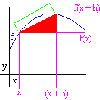
Fractional Calculus I
You can differentiate and integrate n times but what if n is not a whole number? This generalisation of calculus was introduced and discussed on askNRICH by some school students.
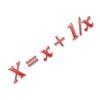
The Why and How of Substitution
Step back and reflect! This article reviews techniques such as substitution and change of coordinates which enable us to exploit underlying structures to crack problems.

The Use of Mathematics in Computer Games
An account of how mathematics is used in computer games including geometry, vectors, transformations, 3D graphics, graph theory and simulations.