Shapely Pairs
A game in which players take it in turns to turn up two cards. If they can draw a triangle which satisfies both properties they win the pair of cards. And a few challenging questions to follow...
Using your knowledge of the properties of numbers, can you fill all the squares on the board?
Different combinations of the weights available allow you to make different totals. Which totals can you make?
My measurements have got all jumbled up! Swap them around and see if you can find a combination where every measurement is valid.
Think of a two digit number, reverse the digits, and add the numbers together. Something special happens...
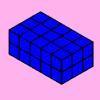
How can you change the surface area of a cuboid but keep its volume the same? How can you change the volume but keep the surface area the same?
Watch these videos to see how Phoebe, Alice and Luke chose to draw 7 squares. How would they draw 100?
Isometric Areas explored areas of parallelograms in triangular units. Here we explore areas of triangles...
Use properties of numbers to work out whether you can satisfy all these statements at the same time.
Here is a machine with four coloured lights. Can you develop a strategy to work out the rules controlling each light?
The number in the square is the mean of the four numbers surrounding it. Can you find the missing numbers?
If you have a large supply of 3kg and 8kg weights, how many of each would you need for the average (mean) of the weights to be 6kg?
What's the largest volume of box you can make from a square of paper?
Players take it in turns to choose a dot on the grid. The winner is the first to have four dots that can be joined to form a rhombus.
Four friends must cross a bridge. How can they all cross it in just 17 minutes?