Snail One Hundred
In this game, you throw a dice and move counters along the snail's body and in a spiral around the snail's shell. It is about understanding tens and ones.
This project challenges you to work out the number of cubes hidden under a cloth. What questions would you like to ask?
How would you find out how many football cards Catrina has collected?
This activity is best done with a whole class or in a large group. Can you match the cards? What happens when you add pairs of the numbers together?
Daisy and Akram have made some number patterns. Can you find out which pattern is longer?
This investigates one particular property of number by looking closely at an example of adding two odd numbers together.
What two-digit numbers can you make with these two dice? What can't you make?
It's Sahila's birthday and she is having a party. How could you answer these questions using a picture, with things, with numbers or symbols?
Can you spot the mistake in this video? How would you work out the answer to this calculation?
There are three baskets, a brown one, a red one and a pink one, holding a total of 10 eggs. How many eggs are in each basket?
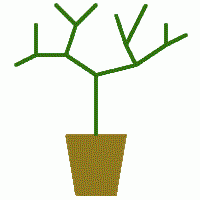
Can you work out how many flowers there will be on the Amazing Splitting Plant after it has been growing for six weeks?
What happens when you add three numbers together? Will your answer be odd or even? How do you know?
An activity centred around observations of dots and how we visualise number arrangement patterns.
Exploring the structure of a number square: how quickly can you put the number tiles in the right place on the grid?
An investigation looking at doing and undoing mathematical operations focusing on doubling, halving, adding and subtracting.
Are these statements relating to odd and even numbers always true, sometimes true or never true?
Try out this number trick. What happens with different starting numbers? What do you notice?
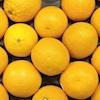
Have a look at these photos of different fruit. How many do you see? How did you count?
Four bags contain a large number of 1s, 3s, 5s and 7s. Can you pick ten numbers from the bags so that their total is 37?
This problem looks at how one example of your choice can show something about the general structure of multiplication.