Vector Walk
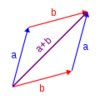
Starting with two basic vector steps, which destinations can you reach on a vector walk?
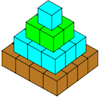
This task, written for the National Young Mathematicians' Award 2016, focuses on 'open squares'. What would the next five open squares look like?
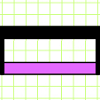
Can you compare these bars with each other and express their lengths as fractions of the black bar?
Can you work out the fraction of the original triangle that is covered by the green triangle?
Here is a machine with four coloured lights. Can you make two lights switch on at once? Three lights? All four lights?
Here is a proof of Euler's formula in the plane and on a sphere together with projects to explore cases of the formula for a polygon with holes, for the torus and other solids with holes and the relationship between Euler's formula and angle deficiency of polyhedra.
Many numbers can be expressed as the difference of two perfect squares. What do you notice about the numbers you CANNOT make?
Think of a number and follow my instructions. Tell me your answer, and I'll tell you what you started with! Can you explain how I know?