Snail One Hundred
In this game, you throw a dice and move counters along the snail's body and in a spiral around the snail's shell. It is about understanding tens and ones.
This is part of our collection of favourite rich tasks arranged by topic.
If you are a teacher, you can find the whole collection on our Primary Curriculum teacher page.
Alternatively, if you are a student, you'll find the same problems on our Primary Curriculum student page.
In this game, you throw a dice and move counters along the snail's body and in a spiral around the snail's shell. It is about understanding tens and ones.
You have a set of the digits from 0 to 9. Can you arrange these in the five boxes to make two-digit numbers as close to the targets as possible?
These spinners will give you the tens and unit digits of a number. Can you choose sets of numbers to collect so that you spin six numbers belonging to your sets in as few spins as possible?
What two-digit numbers can you make with these two dice? What can't you make?
Lee was writing all the counting numbers from 1 to 20. She stopped for a rest after writing seventeen digits. What was the last number she wrote?
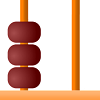
If you put three beads onto a tens/ones abacus you can make the numbers 3, 30, 12 or 21. What numbers can be made with six beads?
Investigate which numbers make these lights come on. What is the smallest number you can find that lights up all the lights?
Exploring the structure of a number square: how quickly can you put the number tiles in the right place on the grid?
In these addition games, you'll need to think strategically to get closest to the target.
Try out this number trick. What happens with different starting numbers? What do you notice?