 Links to the NRICH website Home page

30 April (Primary), 1 May (Secondary)
Resources tagged with: Learning mathematics
There are 98 NRICH Mathematical resources connected to Learning mathematics, you may find related items under Mathematics education and research.
Broad Topics > Mathematics education and research > Learning mathematics
Haringey 2014-2015
Find out about the five-term project (January 2014 to July 2015) which NRICH is leading in conjunction with Haringey Council, funded by London Schools Excellence Fund.



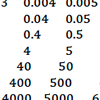
Activities on the Gattegno Chart
In this article, Alf outlines six activities using the Gattegno chart, which help to develop understanding of place value, multiplication and division.
How Can I Support the Development of Early Number Sense and Place Value?
This article for primary teachers expands on the key ideas which underpin early number sense and place value, and suggests activities to support learners as they get to grips with these ideas.

Place Value: the Ten-ness of Ten
This article develops the idea of 'ten-ness' as an important element of place value.

Early Number Sense
This article explores the basic foundations of number sense and outlines relevant research in this area.
Developing Number Fluency - What, Why and How
In this article for primary teachers, Lynne McClure outlines what is meant by fluency in the context of number and explains how our selection of NRICH tasks can help.

Manipulatives in the Primary Classroom
In this article for teachers, Jenni Back offers research-based guidance about the use of manipulatives in the classroom.

Problem Solving and the New Curriculum
Is problem solving at the heart of your curriculum? In this article for teachers, Lynne explains why it should be.

Low Threshold High Ceiling - an Introduction
In this article for teachers, we explain what is meant by Low Threshold High Ceiling tasks, and why we like them.

Developing the Classroom Culture: Using the Dotty Six Activity as a Springboard for Investigation
This article suggests how to dig deeper into who answers questions in your classroom using the game Dotty Six.

Developing a Classroom Culture That Supports a Problem-solving Approach to Mathematics
This article offers you practical ways to investigate aspects of your classroom culture.

Take Some ... Counters
This article for primary teachers outlines how using counters can support mathematical teaching and learning.
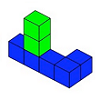
Many Ideas with a Few Cubes
This short article outlines a few activities which make use of interlocking cubes.

Place Your Counters...
An article for teachers which first appeared in the MA's Equals journal, featuring activities which use counters.

Pattern Sniffing
This article for primary teachers outlines how we can encourage children to create, identify, extend and explain number patterns and why being able to do so is useful.

ACME Report: Developing Able Young Mathematicians
Lynne McClure gives an overview of the ACME report 'Raising the bar: developing able young mathematicians', published in December 2012.
Tracking Back Study - Key Questions Arising
Key questions arising from the Tracking Back study


Creating a Low Threshold High Ceiling Classroom
This article explores the key features of a Low Threshold High Ceiling classroom.
On Problems and Problem Solving - Looking Backward and Forward
Jenny Piggott reflects on the event held to mark her retirement from the directorship of NRICH, but also on problem solving itself.

Rocking Chairs, Railway Games and Rayboxes
In this article for teachers, Alan Parr looks at ways that mathematics teaching and learning can start from the useful and interesting things can we do with the subject, including modelling scientific enquiry.

Trick or Treat?
Jennifer Piggott and Steve Hewson write about an area of teaching and learning mathematics that has been engaging their interest recently. As they explain, the word ‘trick’ can be applied to mathematical activity in many ways.
Children's Mathematical Graphics: Understanding the Key Concept
In this article for teachers, Elizabeth Carruthers and Maulfry Worthington explore the differences between 'recording mathematics' and 'representing mathematical thinking'.

Enriching Networks, Inspiring Teachers
Here are examples of how two schools set about the task of ensuring that problem solving was an integral part of their curriculum.

Kingsfield School - Building on Rich Starting Points
Alf and Tracy explain how the Kingsfield School maths department use common tasks to encourage all students to think mathematically about key areas in the curriculum.
Nriching Mathematics in Haringey
This article for teachers describes a joint project in 2007/8 with Haringey Local Authority and NRICH to support improving using and applying mathematics, reasoning and creativity.
CPD Support Using Rich Mathematical Tasks
Liz Woodham describes a project which took place in 2007-9 working with three primary schools. It aimed to improve mathematics teaching and learning, and to trial and refine an online professional development resource.


What's All the Talking About?
This fascinating article delves into the world of talk in the classroom and explains how an understanding of talking can really improve the learning of mathematics.

Who Is an Engineer? A Quick Perspective After One Year of a University Engineering Course
Doug has just finished the first year of his undergraduate engineering course at Cambridge University. Here he gives his perspectives on engineering.

Enriching Classrooms, Inspiring Learning
Teachers who participated in an NRICH workshop produced some posters suggesting how they might use a tessellation interactivity in a range of situations.

Engaging Students, Developing Confidence, Promoting Independence
Ideas to support mathematics teachers who are committed to nurturing confident, resourceful and enthusiastic learners.

A Problem Is a Problem for All That
In this article, Jennifer Piggott talks about just a few of the problems with problems that make them such a rich source of mathematics and approaches to learning mathematics.
Two Heads Are Better Than One
An article that reminds us about the value and importance of communication in the mathematics classroom.

Getting Started with Solving Rich Tasks
Need some help getting started with solving and thinking about rich tasks? Read on for some friendly advice.

What Is a Mathematically Rich Task?
Here we describe the essence of a 'rich' mathematical task

Integrating Rich Tasks - Activity 4.1
This professional development activity is designed to help you assess your embedding of rich tasks into the curriculum through peer observation

Opening Out
Bernard Bagnall describes how to get more out of some favourite NRICH investigations.

Natural Born Mathematicians
Helen Joyce interviews the neuropsychologist Brian Butterworth whose research has shown that we are all born with a "built-in" sense of cardinal number.

Meaningful Maths Trails
Avril Crack describes how she went about planning and setting up a Maths trail for pupils in Bedfordshire.

Parents, Children and Maths
Jenny Murray writes about the sessions she leads in schools for parents to work alongside children on mathematical problems, puzzles and games.

Dominant Intelligences
The second in a series, this article looks at the possible opportunities for children who operate from different intelligences to be involved in "typical" maths problems.

Thinking about Different Ways of Thinking
This article, the first in a series, discusses mathematical-logical intelligence as described by Howard Gardner.

Path of Discovery Series 3: I Do and I Understand
Marion Bond recommends that children should be allowed to use 'apparatus', so that they can physically handle the numbers involved in their calculations, for longer, or across a wider ability band, than is currently the norm.

Path of Discovery Series: 2. First Steps
This article takes a closer look at some of the toys and games that can enhance a child's mathematical learning.

Path of Discovery Series: 1. Uncertain Beginnings
Marion Bond suggests that we try to imagine mathematical knowledge as a broad crazy paving rather than a path of stepping stones. There is no one right place to start and there is no one right route to follow. This article looks at ways of offering children mathematical experiences throughout the day, not just in maths lessons.