A Long Time at the Till
Try to solve this very difficult problem and then study our two suggested solutions. How would you use your knowledge to try to solve variants on the original problem?

Can you correctly order the steps in the proof of the formula for the sum of the first n terms in a geometric sequence?
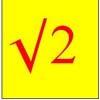
Try this interactivity to familiarise yourself with the proof that the square root of 2 is irrational. Sort the steps of the proof into the correct order.
Put the steps of this proof in order to find the formula for the sum of an arithmetic sequence
A and B are two fixed points on a circle and RS is a variable diamater. What is the locus of the intersection P of AR and BS?
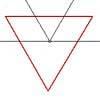
Three equilateral triangles ABC, AYX and XZB are drawn with the point X a moveable point on AB. The points P, Q and R are the centres of the three triangles. What can you say about triangle PQR?
Find the sum, f(n), of the first n terms of the sequence: 0, 1, 1, 2, 2, 3, 3........p, p, p +1, p + 1,..... Prove that f(a + b) - f(a - b) = ab.
Explain why, when moving heavy objects on rollers, the object moves twice as fast as the rollers. Try a similar experiment yourself.
Find all 3 digit numbers such that by adding the first digit, the square of the second and the cube of the third you get the original number, for example 1 + 3^2 + 5^3 = 135.
Given that u>0 and v>0 find the smallest possible value of 1/u + 1/v given that u + v = 5 by different methods.