 Links to the NRICH website Home page

30 April (Primary), 1 May (Secondary)
Resources tagged with: Engineering
There are 55 results
Broad Topics > Cross-curricular contexts > Engineering
The Not-so-simple Pendulum 2
Things are roughened up and friction is now added to the approximate simple pendulum

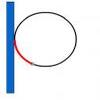
Building up Friction
A series of activities to build up intuition on the mathematics of friction.


Dangerous Driver?
Was it possible that this dangerous driving penalty was issued in error?
Go Spaceship Go
Show that even a very powerful spaceship would eventually run out of overtaking power
The Not-so-simple Pendulum 1
See how the motion of the simple pendulum is not-so-simple after all.

Circular Circuitry
What will happen when you switch on these circular circuits?
Making More Tracks
Given the equation for the path followed by the back wheel of a bike, can you solve to find the equation followed by the front wheel?

Overarch 1
This short question asks if you can work out the most precarious way to balance four tiles.
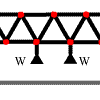
More Bridge Building
Which parts of these framework bridges are in tension and which parts are in compression?
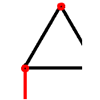
Bridge Builder
In this short problem we investigate the tensions and compressions in a framework made from springs and ropes.
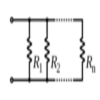
A Circuit Problem
Explore the voltages and currents in this interesting circuit configuration.

stemNRICH - Technology
This is the technology section of stemNRICH - Core.

Maths in the Undergraduate Physical Sciences
An article about the kind of maths a first year undergraduate in physics, engineering and other physical sciences courses might encounter. The aim is to highlight the link between particular maths topics (e.g. complex numbers) and their applications.

Impedance Can Be Complex!
Put your complex numbers and calculus to the test with this impedance calculation.
Differential Electricity
As a capacitor discharges, its charge changes continuously. Find the differential equation governing this variation.
The Wheatstone Bridge
Explore the mathematics behind the famous Wheatstone Bridge circuit.

AC/DC Circuits
This article, including exercises, gives a thorough grounding in the topic of AC/DC circuits.
Who Is an Engineer? A Quick Perspective After One Year of a University Engineering Course
Doug has just finished the first year of his undergraduate engineering course at Cambridge University. Here he gives his perspectives on engineering.
Euler's Buckling Formula
Derive Euler's buckling formula from first principles.

Ramping it Up
Look at the calculus behind the simple act of a car going over a step.
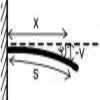
Beam Me Up
A preview of some of the beam deflection mechanics you will look at in the first year of an engineering degree
Stonehenge Is Going Nowhere
In an extension to the Stonehenge problem, consider the mechanical possibilities for an arrangement of frictional rollers.
Moving Stonehenge
A look at the fluid mechanics questions that are raised by the Stonehenge 'bluestones'.

The Power of Dimensional Analysis
An introduction to a useful tool to check the validity of an equation.

Mach Attack
Have you got the Mach knack? Discover the mathematics behind exceeding the sound barrier.
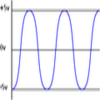
Pumping the Power
What is an AC voltage? How much power does an AC power source supply?
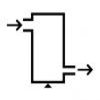
Keep Your Momentum Going
A look at a fluid mechanics technique called the Steady Flow Momentum Equation.

engNRICH
engNRICH is the area of the stemNRICH Advanced site devoted to the mathematics underlying the study of engineering
physNRICH
PhysNRICH is the area of the StemNRICH site devoted to the mathematics underlying the study of physics

Core Scientific Mathematics
This is the area of the advanced stemNRICH site devoted to the core applied mathematics underlying the sciences.

New Units for Old
Can you match up the entries from this table of units?

Not Another NAND!
Prove that you can make any type of logic gate using just NAND gates.
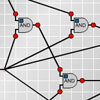
Adding Machine
Can you set the logic gates so that this machine can decide how many bulbs have been switched on?
Procedure Solver
Can you think like a computer and work out what this flow diagram does?
Maximum Flow
Given the graph of a supply network and the maximum capacity for flow in each section find the maximum flow across the network.
Stonehenge
Explain why, when moving heavy objects on rollers, the object moves twice as fast as the rollers. Try a similar experiment yourself.
Overarch 2
Bricks are 20cm long and 10cm high. How high could an arch be built without mortar on a flat horizontal surface, to overhang by 1 metre? How big an overhang is it possible to make like this?