 Links to the NRICH website Home page

30 April (Primary), 1 May (Secondary)
Multiplication and Division KS2

One Wasn't Square


Mrs Morgan, the class's teacher, pinned numbers onto the backs of three children. Use the information to find out what the three numbers were.
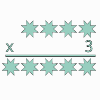
All the Digits
This multiplication uses each of the digits 0 - 9 once and once only. Using the information given, can you replace the stars in the calculation with figures?
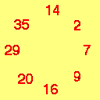
Cycling Squares
Can you make a cycle of pairs that add to make a square number using all the numbers in the box below, once and once only?
Trebling
Can you replace the letters with numbers? Is there only one solution in each case?
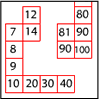
Multiplication Square Jigsaw
Can you complete this jigsaw of the multiplication square?
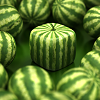
Shape Times Shape
These eleven shapes each stand for a different number. Can you use the number sentences to work out what they are?
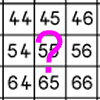
What Do You Need?
Four of these clues are needed to find the chosen number on this grid and four are true but do nothing to help in finding the number. Can you sort out the clues and find the number?
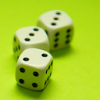
Three Dice
Investigate the sum of the numbers on the top and bottom faces of a line of three dice. What do you notice?
How Do You Do It?
This group activity will encourage you to share calculation strategies and to think about which strategy might be the most efficient.

Table Patterns Go Wild!
Nearly all of us have made table patterns on hundred squares, that is 10 by 10 grids. This problem looks at the patterns on differently sized square grids.
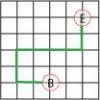
Journeys in Numberland
Tom and Ben visited Numberland. Use the maps to work out the number of points each of their routes scores.
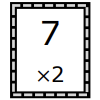
Ordering Cards
This problem is designed to help children to learn, and to use, the two and three times tables.

Let Us Divide!
Look at different ways of dividing things. What do they mean? How might you show them in a picture, with things, with numbers and symbols?
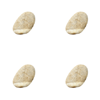
Pebbles
Place four pebbles on the sand in the form of a square. Keep adding as few pebbles as necessary to double the area. How many extra pebbles are added each time?

Sweets in a Box
How many different shaped boxes can you design for 36 sweets in one layer? Can you arrange the sweets so that no sweets of the same colour are next to each other in any direction?
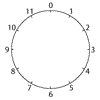
Round and Round the Circle
What happens if you join every second point on this circle? How about every third point? Try with different steps and see if you can predict what will happen.
Highest and Lowest
Put operations signs between the numbers 3 4 5 6 to make the highest possible number and lowest possible number.
Zios and Zepts
On the planet Vuv there are two sorts of creatures. The Zios have 3 legs and the Zepts have 7 legs. The great planetary explorer Nico counted 52 legs. How many Zios and how many Zepts were there?

Abundant Numbers
48 is called an abundant number because it is less than the sum of its factors (without itself). Can you find some more abundant numbers?

Make 100
Find at least one way to put in some operation signs to make these digits come to 100.

Flashing Lights
Norrie sees two lights flash at the same time, then one of them flashes every 4th second, and the other flashes every 5th second. How many times do they flash together during a whole minute?

The Moons of Vuvv
The planet of Vuvv has seven moons. Can you work out how long it is between each super-eclipse?

Mystery Matrix
Can you fill in this table square? The numbers 2 -12 were used to generate it with just one number used twice.

Four Goodness Sake
Use 4 four times with simple operations so that you get the answer 12. Can you make 15, 16 and 17 too?
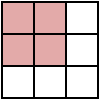
Multiplication Squares
Can you work out the arrangement of the digits in the square so that the given products are correct? The numbers 1 - 9 may be used once and once only.
Factor Lines
Arrange the four number cards on the grid, according to the rules, to make a diagonal, vertical or horizontal line.
Two Primes Make One Square
Can you make square numbers by adding two prime numbers together?
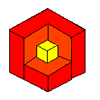
Cubes Within Cubes
We start with one yellow cube and build around it to make a 3x3x3 cube with red cubes. Then we build around that red cube with blue cubes and so on. How many cubes of each colour have we used?

Remainders
I'm thinking of a number. My number is both a multiple of 5 and a multiple of 6. What could my number be?

Which Is Quicker?
Which is quicker, counting up to 30 in ones or counting up to 300 in tens? Why?
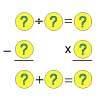
A Square of Numbers
Can you put the numbers 1 to 8 into the circles so that the four calculations are correct?

Odd Squares
Think of a number, square it and subtract your starting number. Is the number you're left with odd or even? How do the images help to explain this?
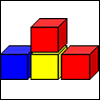
Up and Down Staircases
One block is needed to make an up-and-down staircase, with one step up and one step down. How many blocks would be needed to build an up-and-down staircase with 5 steps up and 5 steps down?

Carrying Cards
These sixteen children are standing in four lines of four, one behind the other. They are each holding a card with a number on it. Can you work out the missing numbers?
An Easy Way to Multiply by 10?
Do you agree with Badger's statements? Is Badger's reasoning 'watertight'? Why or why not?
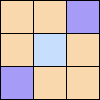
Multiples Grid
What do the numbers shaded in blue on this hundred square have in common? What do you notice about the pink numbers? How about the shaded numbers in the other squares?
Factors and Multiples Game
This game can replace standard practice exercises on finding factors and multiples.

Music to My Ears
Can you predict when you'll be clapping and when you'll be clicking if you start this rhythm? How about when a friend begins a new rhythm at the same time?

What's in the Box?
This big box multiplies anything that goes inside it by the same number. If you know the numbers that come out, what multiplication might be going on in the box?
Factor-multiple Chains
Can you see how these factor-multiple chains work? Find the chain which contains the smallest possible numbers. How about the largest possible numbers?
Four Go
This challenge is a game for two players. Choose two of the numbers to multiply or divide, then mark your answer on the number line. Can you get four in a row?
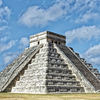
Picture a Pyramid ...
Imagine a pyramid which is built in square layers of small cubes. If we number the cubes from the top, starting with 1, can you picture which cubes are directly below this first cube?

The Remainders Game
Play this game and see if you can figure out the computer's chosen number.

Times Tables Shifts
In this activity, the computer chooses a times table and shifts it. Can you work out the table and the shift each time?

Counting Cogs
Which pairs of cogs let the coloured tooth touch every tooth on the other cog? Which pairs do not let this happen? Why?
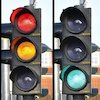
Light the Lights Again
Each light in this interactivity turns on according to a rule. What happens when you enter different numbers? Can you find the smallest number that lights up all four lights?
Follow the Numbers
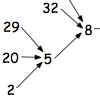
What happens when you add the digits of a number then multiply the result by 2 and you keep doing this? You could try for different numbers and different rules.
Curious Number
Can you order the digits from 1-3 to make a number which is divisible by 3 so when the last digit is removed it becomes a 2-figure number divisible by 2, and so on?
Factor Track
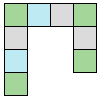
Factor track is not a race but a game of skill. The idea is to go round the track in as few moves as possible, keeping to the rules.
So It's Times!
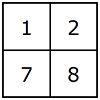
How will you decide which way of flipping over and/or turning the grid will give you the highest total?
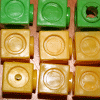
Square Subtraction
Look at what happens when you take a number, square it and subtract your answer. What kind of number do you get? Can you prove it?

This Pied Piper of Hamelin
Investigate the different numbers of people and rats there could have been if you know how many legs there are altogether!
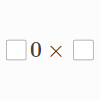
Multiply Multiples 1
Can you complete this calculation by filling in the missing numbers? In how many different ways can you do it?

Multiply Multiples 2
Can you work out some different ways to balance this equation?
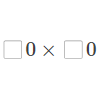
Multiply Multiples 3
Have a go at balancing this equation. Can you find different ways of doing it?
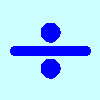
Division Rules
This challenge encourages you to explore dividing a three-digit number by a single-digit number.
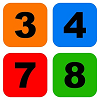
Always, Sometimes or Never? Number
Are these statements always true, sometimes true or never true?

Satisfying Four Statements
Can you find any two-digit numbers that satisfy all of these statements?

Picture Your Method
Can you match these calculation methods to their visual representations?

Compare the Calculations
Can you put these four calculations into order of difficulty? How did you decide?
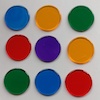
Dicey Array
Watch the video of this game being played. Can you work out the rules? Which dice totals are good to get, and why?

4 by 4 Mathdokus
Can you use the clues to complete these 4 by 4 Mathematical Sudokus?

You may also be interested in this collection of activities from the STEM Learning website, that complement the NRICH activities above.