Exploring Cubic Functions
Quadratic graphs are very familiar, but what patterns can you explore with cubics?
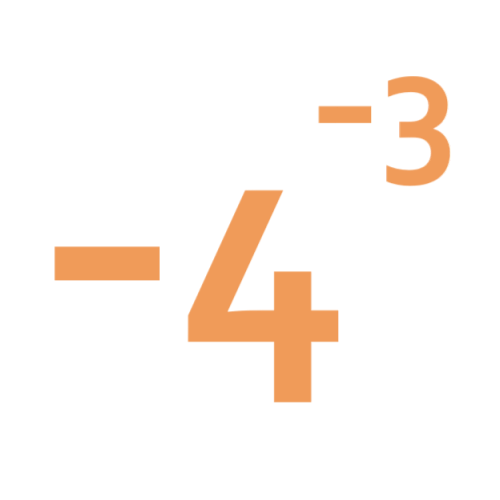
What does this number mean? Which order of 1, 2, 3 and 4 makes the highest value? Which makes the lowest?
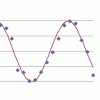
10 graphs of experimental data are given. Can you use a spreadsheet to find algebraic graphs which match them closely, and thus discover the formulae most likely to govern the underlying processes?
There are many different methods to solve this geometrical problem - how many can you find?
The equation a^x + b^x = 1 can be solved algebraically in special cases but in general it can only be solved by numerical methods.
In this short problem, try to find the location of the roots of some unusual functions by finding where they change sign.
Solve these differential equations to see how a minus sign can change the answer
Investigate the family of graphs given by the equation x^3+y^3=3axy for different values of the constant a.