 Links to the NRICH website Home page

30 April (Primary), 1 May (Secondary)
Resources tagged with: Group worthy
There are 21 NRICH Mathematical resources connected to Group worthy, you may find related items under Mathematics education and research.
Broad Topics > Mathematics education and research > Group worthy
Thirsty?
Can you lay out the pictures of the drinks in the way described by the clue cards?



Planning a School Trip
You are organising a school trip and you need to write a letter to parents to let them know about the day. Use the cards to gather all the information you need.

Counting Cogs
Which pairs of cogs let the coloured tooth touch every tooth on the other cog? Which pairs do not let this happen? Why?

Growing Rectangles
What happens to the area and volume of 2D and 3D shapes when you enlarge them?
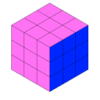
Partly Painted Cube
Jo made a cube from some smaller cubes, painted some of the faces of the large cube, and then took it apart again. 45 small cubes had no paint on them at all. How many small cubes did Jo use?
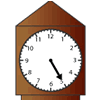
Two Clocks
These clocks have only one hand, but can you work out what time they are showing from the information?

Efficient Cutting
Use a single sheet of A4 paper and make a cylinder having the greatest possible volume. The cylinder must be closed off by a circle at each end.
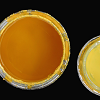
Painted Cube
Imagine a large cube made from small red cubes being dropped into a pot of yellow paint. How many of the small cubes will have yellow paint on their faces?

Seven Squares - Group-worthy Task
Choose a couple of the sequences. Try to picture how to make the next, and the next, and the next... Can you describe your reasoning?

Are You Thirsty?
Can you lay out the pictures of the drinks in the way described by the clue cards?

Group-worthy Tasks and Their Potential to Support Children to Develop Independent Problem-solving Skills
In this article for teachers, Jennie Pennant outlines how group-worthy tasks support the development of children's problem-solving skills.

Upper Primary Group-worthy Tasks
Although almost any NRICH activity could be tackled in a group, these upper primary activities have been created specifically with group work in mind.

Lower Primary Group-worthy Tasks
Although almost any NRICH activity could be tackled in a group, these lower primary activities have been created specifically with group work in mind.
Group-working Skills
This article for teachers suggests a range of activities to help children get better at working in groups.
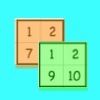
Sorting the Numbers
Complete these two jigsaws then put one on top of the other. What happens when you add the 'touching' numbers? What happens when you change the position of the jigsaws?
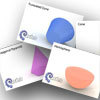
Developing Good Team-working Skills
Group work depends on effective team work. This article describes attributes of effective team work and links to "Team Building" problems that can be used to develop learners' team working skills.

It's a Fence!
In this challenge, you will work in a group to investigate circular fences enclosing trees that are planted in square or triangular arrangements.

Close to Triangular
Drawing a triangle is not always as easy as you might think!
Sort Them Out (2)
Can you each work out the number on your card? What do you notice? How could you sort the cards?

Fingers and Hands
How would you count the number of fingers in these pictures?

Erratic Quadratic
Can you find a quadratic equation which passes close to these points?