 Links to the NRICH website Home page

30 April (Primary), 1 May (Secondary)
Resources tagged with: Pedagogy
There are 105 results
Broad Topics > Mathematics education and research > Pedagogy
Enriching Classrooms, Inspiring Learning
Teachers who participated in an NRICH workshop produced some posters suggesting how they might use a tessellation interactivity in a range of situations.

Engaging Students, Developing Confidence, Promoting Independence
Ideas to support mathematics teachers who are committed to nurturing confident, resourceful and enthusiastic learners.

A Problem Is a Problem for All That
In this article, Jennifer Piggott talks about just a few of the problems with problems that make them such a rich source of mathematics and approaches to learning mathematics.
Four Teachers Using NRICH
Vicki Pike was one of four NRICH Teacher Fellows who worked on embedding NRICH materials into their teaching. In this article, she writes about her experiences of working with students at Key Stage two.
Teachers Using NRICH 2
Kirsti Ashworth, an NRICH Teacher Fellow, talks about her experiences of using rich tasks.
Teachers Using NRICH 3
Sharon Walter, an NRICH teacher fellow, talks about her experiences of trying to embed NRICH tasks into her everyday practice.

Teachers Using NRICH 1
Peter Hall was one of four NRICH Teacher Fellows who worked on embedding NRICH materials into their teaching. In this article, he writes about his experiences of working with students at Key Stage Three.
Two Heads Are Better Than One
An article that reminds us about the value and importance of communication in the mathematics classroom.
Teachers' Guide to Getting Started
This gives a standard set of questions and tips for running rich tasks in the classroom.

Integrating Rich Tasks - Activity 4.3
This professional development activity is designed to help you assess your embedding of rich tasks into the curriculum and, in particular, think about what to do next

Integrating Rich Tasks - Activity 4.2
This professional development activity is designed to help you assess your embedding of rich tasks into the curriculum through evaluating a theme

Integrating Rich Tasks - Activity 1.4
This professional development activity encourages you to investigate how rich tasks and problem solving link together.

Integrating Rich Tasks - Activity 4.1
This professional development activity is designed to help you assess your embedding of rich tasks into the curriculum through peer observation

Integrating Rich Tasks - Activity 3
The aim of this professional development activity is to successfully integrate some rich tasks into your curriculum planning.

Integrating Rich Tasks - Activity 2.1
This professional development activity looks at what teachers can do to support learners engaging with rich tasks

Integrating Rich Tasks - Activity 1.5
This professional development activity encourages you to investigate what pupils are doing when they problem solving.

Integrating Rich Tasks - Activity 1.3
This professional development activity encourages you to investigate what is meant by higher-order thinking skills.

Integrating Rich Tasks - Activity 1.2
These two tasks are designed to support professional development on integrating rich tasks. You are asked to think about what problems that encourage Higher Order Thinking Skills look like.

Integrating Rich Tasks - Activity 1.1
This is activity 1.1 in the series of activities designed to support professional development through integrating rich tasks. This activity looks specifically at what makes an activity "rich".
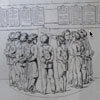
Maths in the Victorian Classroom
What was it like to learn maths at school in the Victorian period? We visited the British Schools Museum in Hitchin to find out.
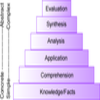

Crossing Bridges
An article for teachers based on a lecture and workshop activities at the NZAMT conference in New Zealand 2007

What's Inside/outside/under the Box?
This article describes investigations that offer opportunities for children to think differently, and pose their own questions, about shapes.

Outside the Box
This article explores the links between maths, art and history, and suggests investigations that are enjoyable as well as challenging.

Cultivating Creativity
Creativity in the mathematics classroom is not just about what pupils do but also what we do as teachers. If we are thinking creatively about the mathematical experiences we offer our pupils we can open up opportunities for them to be creative. Jennifer Piggott shares some of her thoughts on creative teaching, and how it can encourage creative learners.
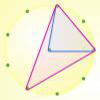
Interacting with the Geometry of the Circle
Jennifer Piggott and Charlie Gilderdale describe a free interactive circular geoboard environment that can lead learners to pose mathematical questions.

Enriching Patterns
Following on from a workshop at an MA Easter conference, Jennifer and Jenni talked about the way in which the website is made more accessible to teachers who want to plan threads of activity. Here’s a pattern- based theme.

I'm Stuck!
Being stuck is usually thought of as being a negative state of affairs. We want our pupils to succeed, not to struggle. Or do we? This article discusses why being stuck can be fruitful.

Working Effectively with All Learners
Some questions and prompts to encourage discussion about what experiences you want to give your pupils to help them reach their full potential in mathematics.
Working with Highly Able Mathematicians - Secondary
Activities and material for teachers.
Stacks of Maths!
In this article for teachers, Bernard gives an example of taking an initial activity and getting questions going that lead to other explorations.
Using Games in the Classroom
Gillian Hatch analyses what goes on when mathematical games are used as a pedagogic device.


Angle Measurement: an Opportunity for Equity
Suggestions for worthwhile mathematical activity on the subject of angle measurement for all pupils.
Logic, and How it Should Influence Our Teaching
Providing opportunities for children to participate in group narrative in our classrooms is vital. Their contrasting views lead to a high level of revision and improvement, and through this process they become more aware of "thinking". This article looks at the way we handle these narratives.

Meaningful Maths Trails
Avril Crack describes how she went about planning and setting up a Maths trail for pupils in Bedfordshire.
Dominant Intelligences
The second in a series, this article looks at the possible opportunities for children who operate from different intelligences to be involved in "typical" maths problems.

A Japanese Mathematics Lesson
Jenni Way describes her visit to a Japanese mathematics classroom.
Calculating the Difference: A Discussion of the Use of Calculators in the English Primary Classroom.
Clare Green looks at the role of the calculator in the teaching and learning of primary mathematics.

Teaching Fractions with Understanding: Part-whole Concept
Written for teachers, this article describes four basic approaches children use in understanding fractions as equal parts of a whole.

Closing the Learning and Teaching Gap
This article discusses the findings of the 1995 TIMMS study how to use this information to close the performance gap that exists between nations.
Co-operative Problem Solving: Pieces of the Puzzle Approach
The content of this article is largely drawn from an Australian publication by Peter Gould that has been a source of many successful mathematics lessons for both children and student-teachers. It presents a style of problem-solving activity that has the potential to benefit ALL children in a class, both mathematically and socially, and is readily adaptable to most topics in mathematics curricula.

A Maths Afternoon
This article describes no ordinary maths lesson. There were 24 children, mostly Years 3 and 4, and there were 17 adults working with them - mothers, fathers, one grandmother and two grandfathers, a classroom assistant and their regular teacher. Every child was working with an adult, and no two adults sat together.
Learning Mathematics Through Games Series: 2.types of Games
This article, the second in the series, looks at some different types of games and the sort of mathematical thinking they can develop.
Learning Mathematics Through Games Series: 1. Why Games?
This article supplies teachers with information that may be useful in better understanding the nature of games and their role in teaching and learning mathematics.
The Development of Spatial and Geometric Thinking: 5 to 18
This is the first article in a series which aim to provide some insight into the way spatial thinking develops in children, and draw on a range of reported research. The focus of this article is the work of Piaget and Inhelder.

Roasting Old Chestnuts 4
For teachers. Yet more school maths from long ago-interest and percentages.


Roasting Old Chestnuts
Mainly for teachers. A discussion and examples of some of the school mathematics of yesteryear.