

Welcome to the Mathematics Supporting SET area of stemNRICH

Mathematics underpins the majority of science, design and technology. The following problems are tasks for the mathematics classroom which reinforce some of the key concepts in Science, Engineering, Design and Technology without requiring detailed knowledge outside of mathematics. If you are a mathematics teacher you can use these problems for directly teaching content from the mathematics
curriculum. If you are a student you can use these problems to improve the mathematical skills needed to get the most from science and technology.
Stage 3 is roughly 11-14 years and Stage 4 roughly 14-16 years. The stars indicate how easily most learners can get into the problem, although most problems contain enough depth to challenge and stimulate all.
Back to main STEM pages.
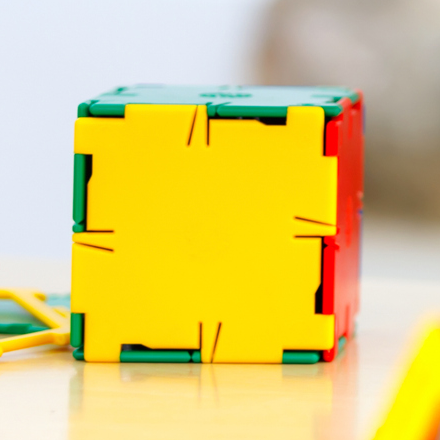
Air Nets


Can you visualise whether these nets fold up into 3D shapes? Watch the videos each time to see if you were correct.

Isometric Drawing

Temperature
Is there a temperature at which Celsius and Fahrenheit readings are the same?

Toad in the Hole

Fill Me Up
Can you sketch graphs to show how the height of water changes in different containers as they are filled?
Mixing Lemonade
Can you work out which drink has the stronger flavour?
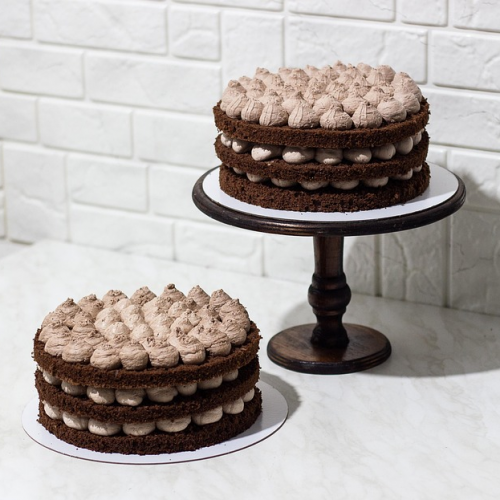
Chocolate Cake
If I don't have the size of cake tin specified in my recipe, will the size I do have be OK?
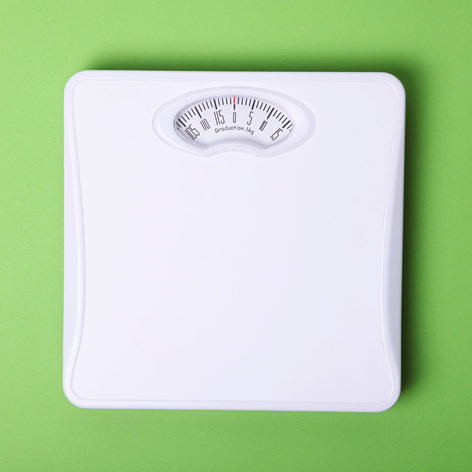
How Would You Score It?
Invent a scoring system for a 'guess the weight' competition.
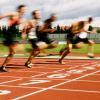
Olympic Records
Can you deduce which Olympic athletics events are represented by the graphs?
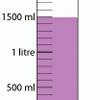
Place Your Orders
Can you rank these sets of quantities in order, from smallest to largest? Can you provide convincing evidence for your rankings?

Triathlon and Fitness
The triathlon is a physically gruelling challenge. Can you work out which athlete burnt the most calories?

Pinhole Camera

Designing Table Mats

Olympic Measures
These Olympic quantities have been jumbled up! Can you put them back together again?

Make Your Own Pencil Case
What shape would fit your pens and pencils best? How can you make it?

Witch's Hat

Speedy Sidney
Two trains set off at the same time from each end of a single straight railway line. A very fast bee starts off in front of the first train and flies continuously back and forth between the two trains. How far does Sidney fly before he is squashed between the two trains?

Perspective Drawing

Who's the Best?
Which countries have the most naturally athletic populations?

Constantly Changing

Does This Sound About Right?

Data Matching
Use your skill and judgement to match the sets of random data.
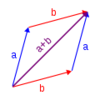
Vector Walk
Starting with two basic vector steps, which destinations can you reach on a vector walk?

Big and Small Numbers in Biology
Work with numbers big and small to estimate and calulate various quantities in biological contexts.

Perfect Eclipse

Big and Small Numbers in Chemistry

More or Less?

Electric Kettle
Explore the relationship between resistance and temperature

Bigger or Smaller?

Square Pair
Explore the shape of a square after it is transformed by the action of a matrix.

Choose Your Units
Which units would you choose best to fit these situations?

Guessing the Graph
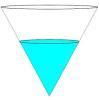
Fill Me Up Too
In Fill Me Up we invited you to sketch graphs as vessels are filled with water. Can you work out the equations of the graphs?

Investigating the Dilution Series
Which dilutions can you make using only 10ml pipettes?
How Do You React?

Construct the Solar System
What's That Graph?
Can you work out which processes are represented by the graphs?

Maths Filler 2

Big and Small Numbers in the Physical World

Nutrition and Cycling
Andy wants to cycle from Land's End to John o'Groats. Will he be able to eat enough to keep him going?
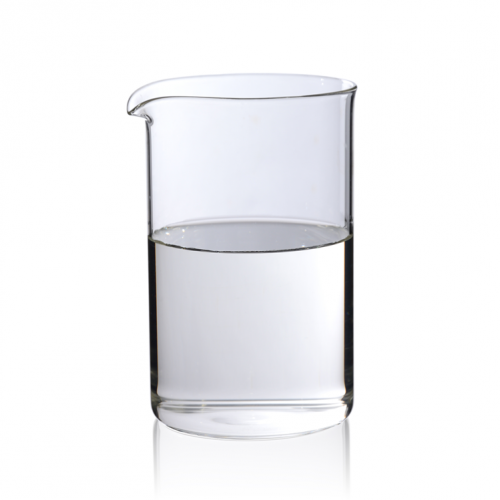
Immersion
Various solids are lowered into a beaker of water. How does the water level rise in each case?

Mystery Procedure

Global Warming

Counting Dolphins

Big and Small Numbers in Physics
Work out the numerical values for these physical quantities.
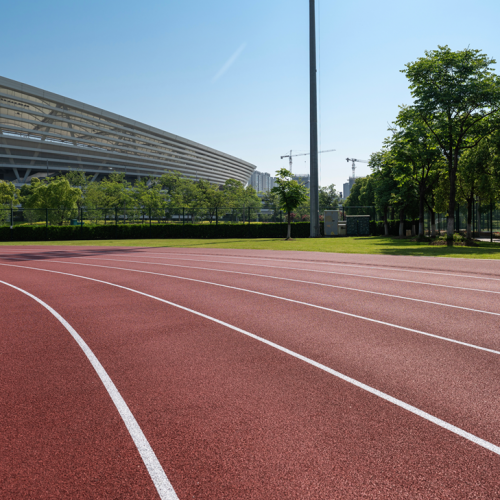
Track Design
Where should runners start the 200m race so that they have all run the same distance by the finish?

Approximately Certain

David and Goliath
Does weight confer an advantage to shot putters?
Back Fitter
10 graphs of experimental data are given. Can you use a spreadsheet to find algebraic graphs which match them closely, and thus discover the formulae most likely to govern the underlying processes?

Alternative Record Book
In which Olympic event does a human travel fastest? Decide which events to include in your Alternative Record Book.
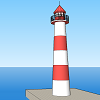
Far Horizon
An observer is on top of a lighthouse. How far from the foot of the lighthouse is the horizon that the observer can see?

Carbon Footprints