Take some time to look at the route followed by the arrows in this diagram. Can you now look away and list the points visited?
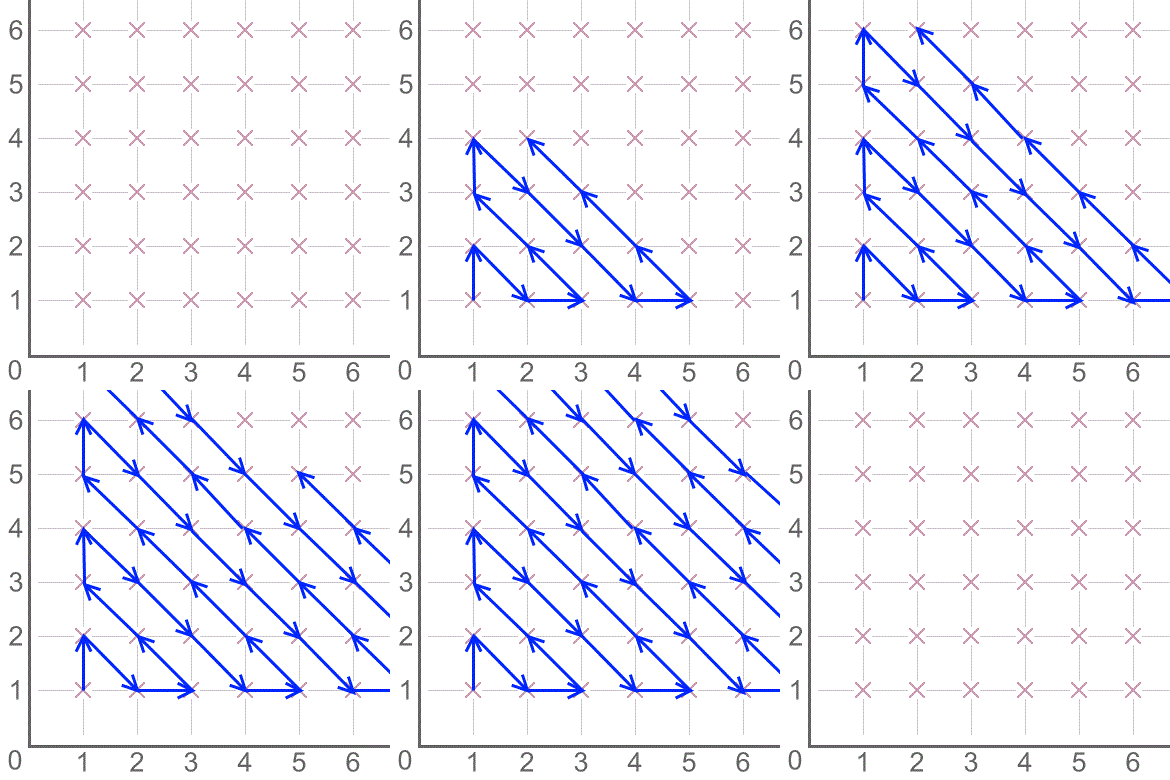
If the pattern of arrows continues for ever, which point will be the 100th to be visited?
How many steps will it take to reach (60,40)?
Where will the next step take you to?
Can you design an alternative route that visits all the points on a grid?
Can you still work out how many steps it will take you to reach (60,40)?
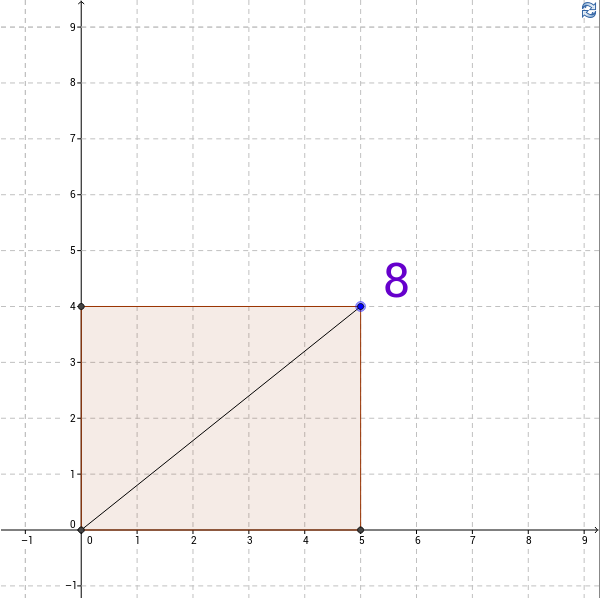
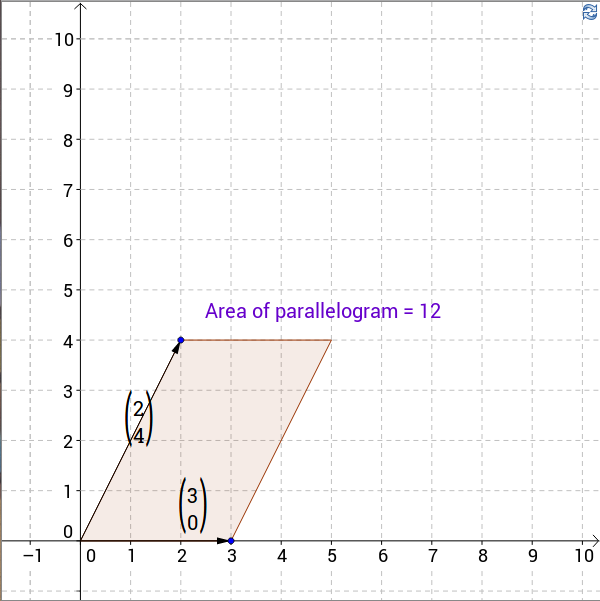
Move the top right-hand corner of the rectangle. Can you work out what the purple number represents?
If the pattern of arrows continues for ever, which point will be the 100th to be visited?
How many steps will it take to reach (60,40)?
Where will the next step take you to?
Can you design an alternative route that visits all the points on a grid?
Can you still work out how many steps it will take you to reach (60,40)?
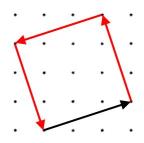
Here is a diagram showing how vectors can describe a journey round a square.
The journey starts along the black vector (3, 1)
What vectors describe the rest of the journey?
What happens if I add vectors together?
What is special about opposite sides of the squares?
What is special about adjacent sides of the squares?
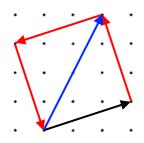
If I know the vector for the diagonal can I work out the other vectors?
Explore journeys round various squares of your own and see what you can find out.
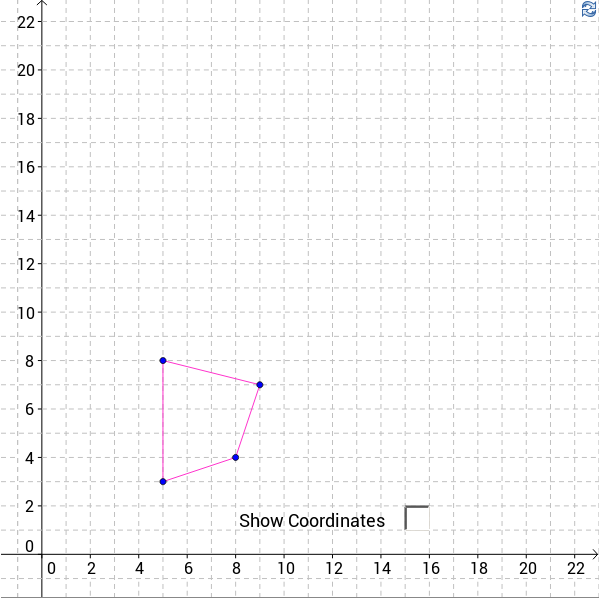
Move the blue points below to change the vectors that define the parallelogram.
Explore how the area of the parallelogram changes as you change the vectors.
Is there a formula for the area of a parallelogram if I know the two vectors?
Why does the formula work?
What is the formula in the special case when the parallelogram is a square?
What is special about the areas of the rhombuses you can make?