

Frieze Patterns in Cast Iron
The 'Sydney Lace' of Australia - and the rest of the world
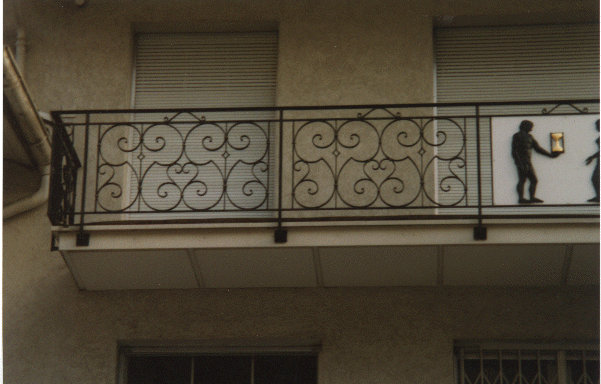
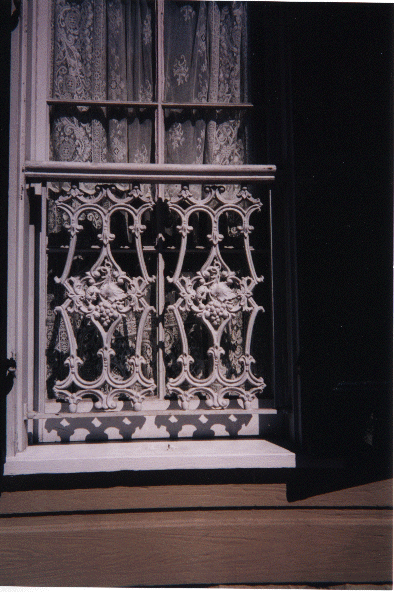
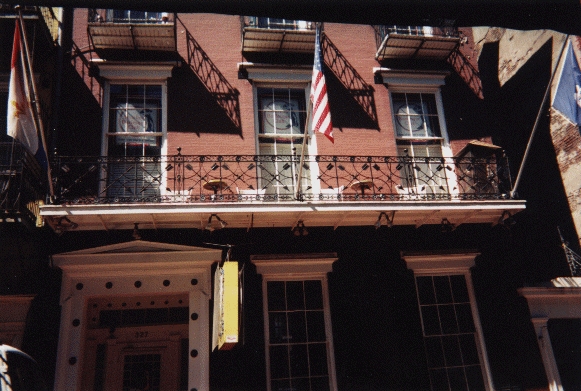
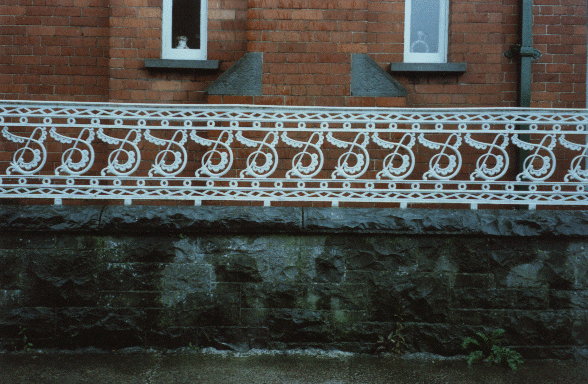
When I visited the University of Sydney for the spring term a few years ago I began to notice the immense variety of cast ironwork on the balconies around the city. I set myself a challenge - "How many of the seven frieze pattern types can I find in this decorative work''.
Since that trip I have been more observant of the decorations in railings and balustrades in all the countries which I visit. Even my friends have become interested and one of them is responsible for the photographs from New Orleans shown later.
Before I explain the mathematics I would like you to look at some of my photographs. I will not tell you how many of the seven pattern types I discovered in Australia; by the time you have read this article you should be able to answer that question for yourself.
Most of the photos are of balcony railings but sometimes they are of the canopy or apron above (that is the decoration on the overhanging roof above the balcony). The architectural styles vary as do the types of buildings but all the pictures are of ironwork railings.
The Queensland selection (1-9) show some of the traditional houses with large verandahs, convenient for the hot climate and usually built on stilts with a basement below. Also included is a band stand in a park in Townsville, a large and rather grand Brisbane club building and a brand new house on a housing estate.

The Sydney and Melbourne photographs (10-14) show the city housing, frequently terraced and with smaller balconies than the large verandahs of the north.
Click on the picture titles to see a larger image:
Image

| Image

| Image

|
Image

| Image

| Image

|
Image

| Image

| Image

|
Image

| Image

| Image

|
Image

| Image

|
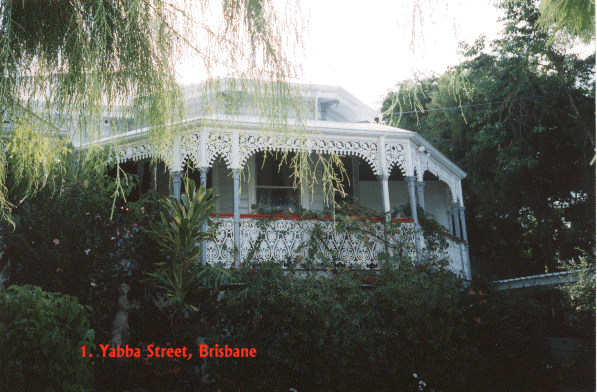
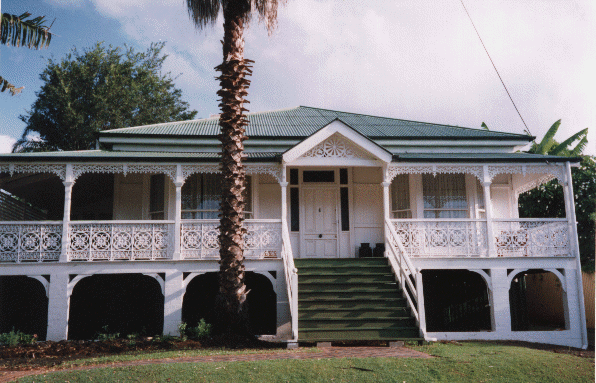
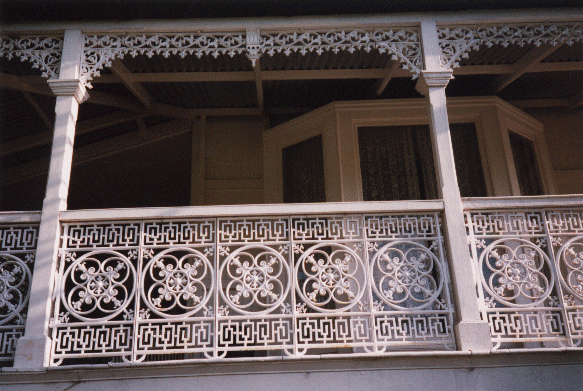
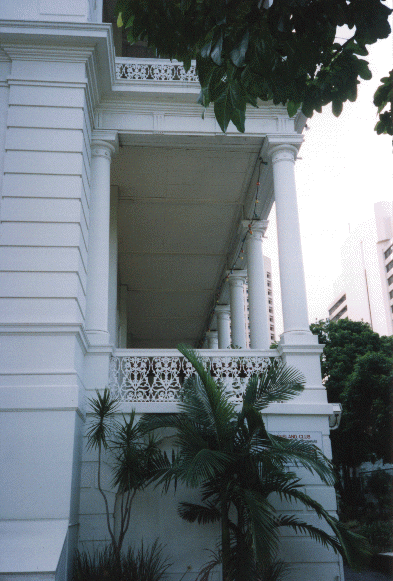
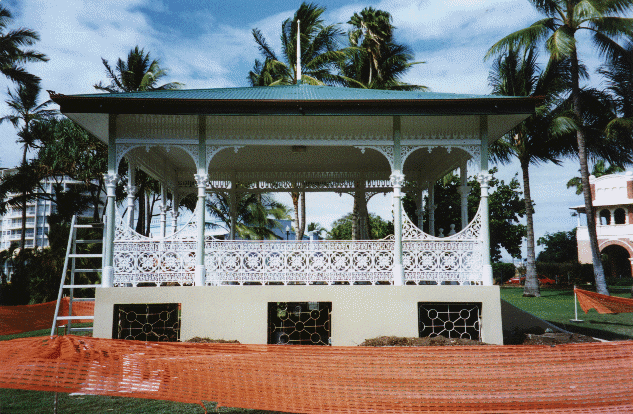
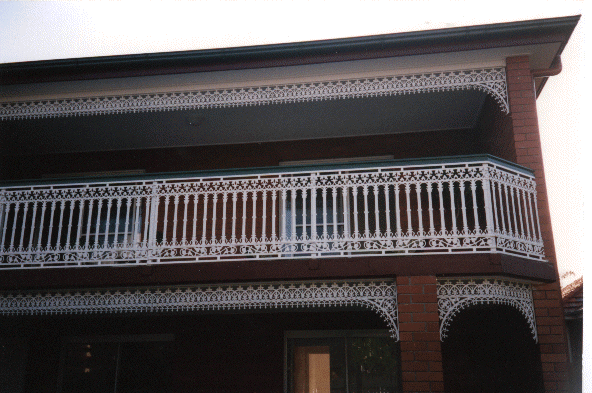
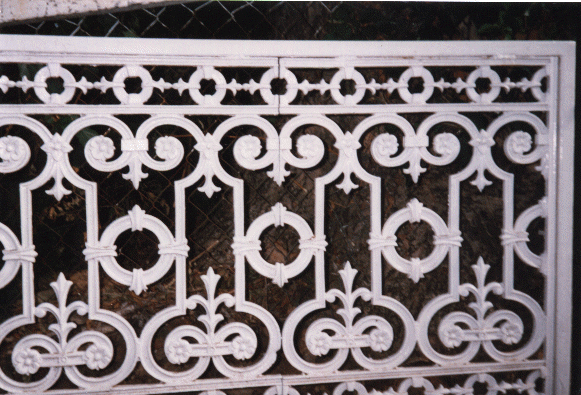
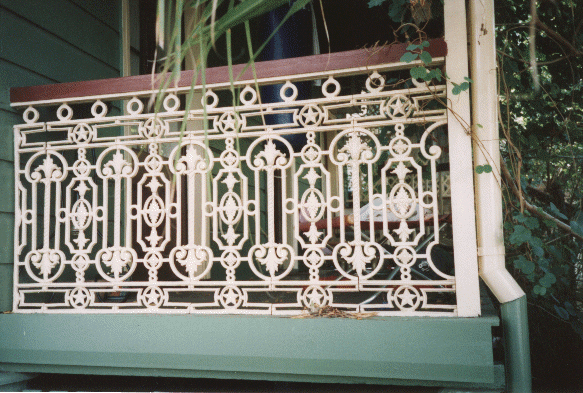
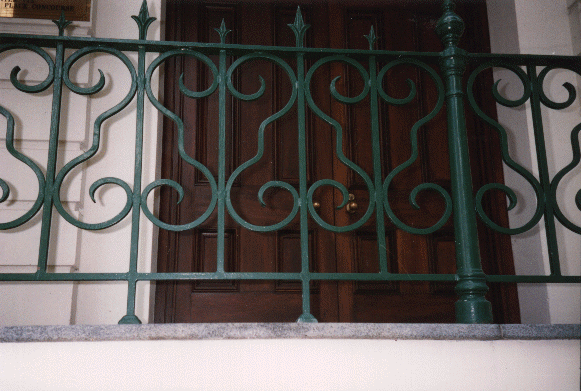
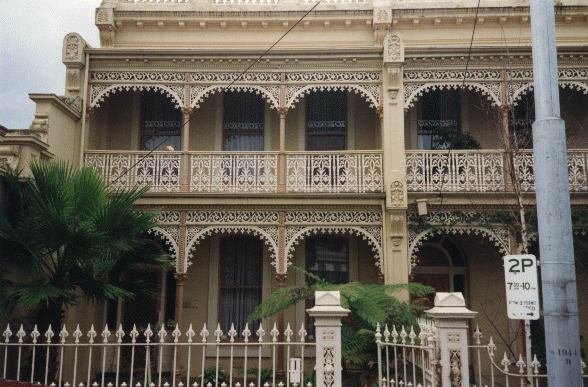
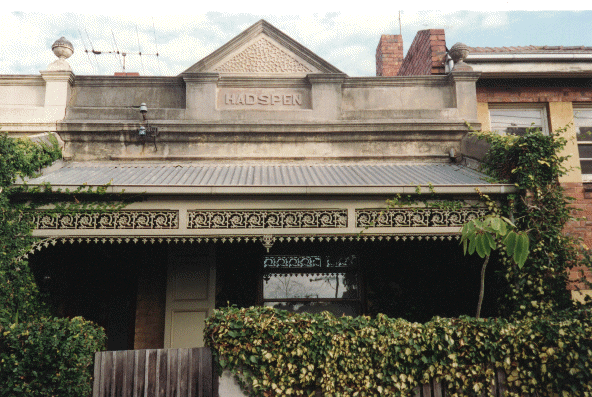
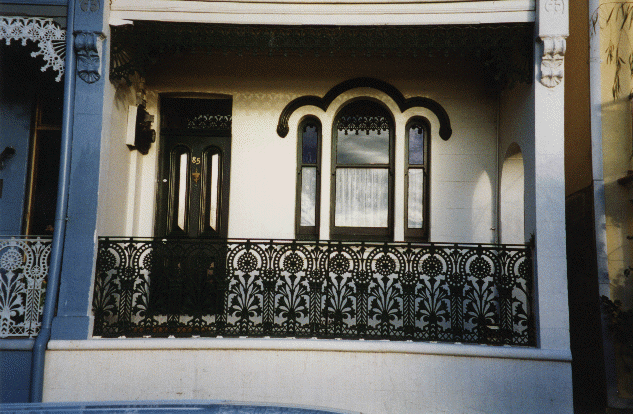
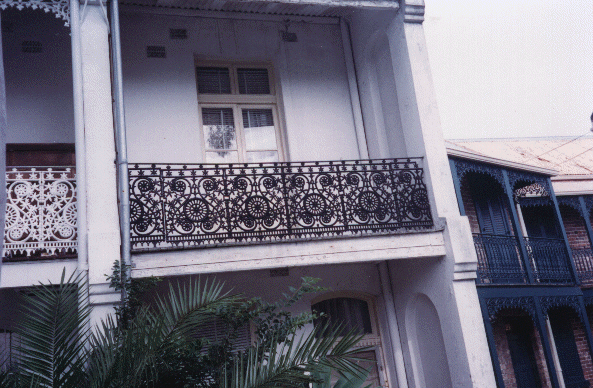
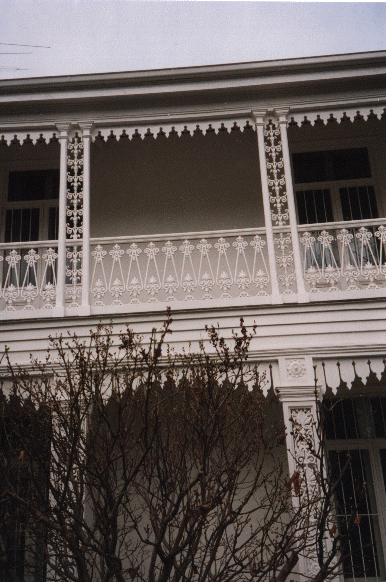
Let me explain the challenge which I set myself in Sydney. A frieze pattern is any strip pattern which repeats itself in some way. One part of the pattern is identical to some other part further along, you cannot tell where you are. Not only is this true, but the pattern can be shifted along a bit or turned or flipped and it still looks the same as before. The new orientation of the pattern can be placed exactly on top of another part of the pattern some distance along and you cannot see the join!
There are just seven ways of 'transforming' a pattern so that it is indistinguishable from the original. This means that there are just seven underlying symmetrical structures to the immense variety of patterns which can be produced.
The simplest way to produce a frieze pattern is to produce a motif and simply repeat it alongside the first one. This action is called a translation in mathematics. So the simplest frieze pattern has only 'translational' symmetry.
The other symmetries which are possible are reflections in both horizontal and/or vertical mirror lines, rotations of 180 degrees (half turns), or glide reflections in a horizontal mirror line.
Click here to see how each of the seven types is constructed.
Click below to see an example of each frieze type in cast iron.
| Type 1: | p111 | Paris museum |
| Type 2: | pm11 | Sydney house "Bangor" |
| Type 3: | pmm2 | Brisbane |
| Type 4: | p1a1 | Melbourne |
| Type 5: | pma2 | Paris |
| Type 6: | p112 | Paris |
| Type 7: | p1m1 | New Orleans |
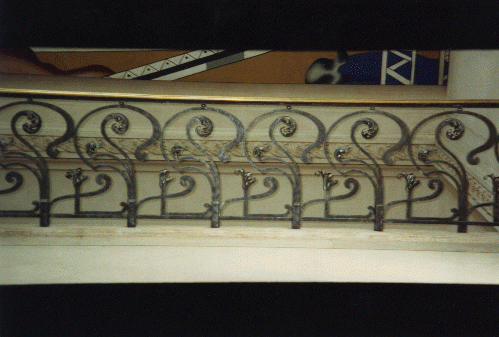
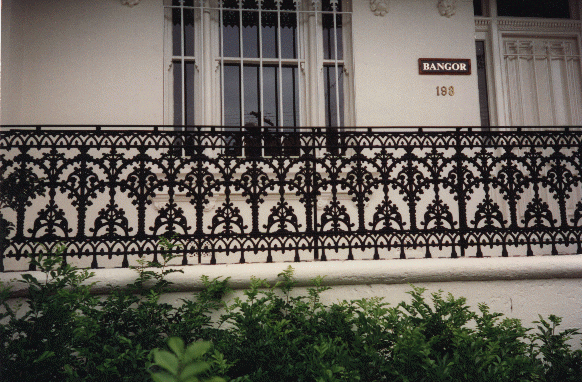
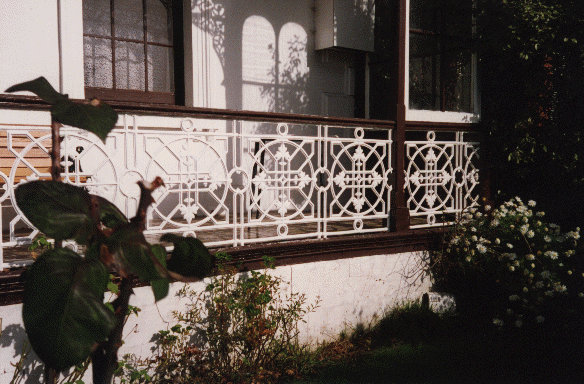
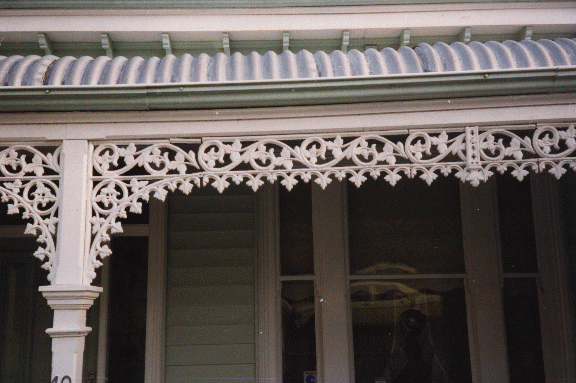
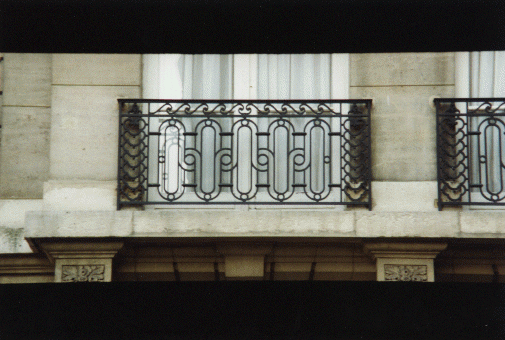
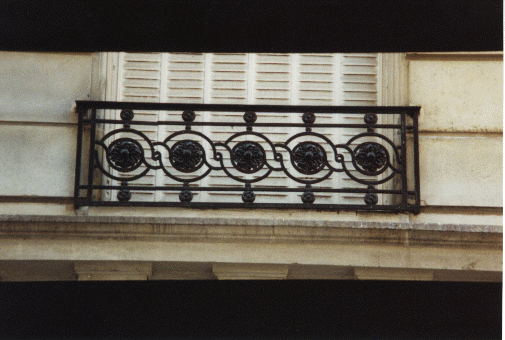
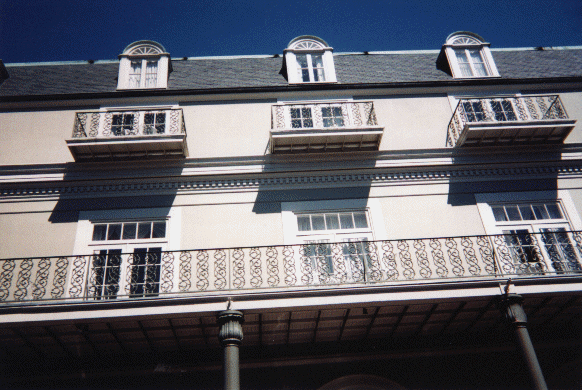
Different structures predominate in various states of Australia. In NSW and Victoria the majority of the patterns were Type 2 whereas in Queensland and Northern Territories you can see more of Type 3. In all states the 'aprons' above the balconies tended to be of Type 1 or Type 4 .
There are noticeable variations in other countries too. A predominant pattern everywhere is Type 2 but some cities have more of Type 3. Lisbon and Dublin, for example, have more Type 3 than you would see in Paris or Glasgow. In Limerick in Ireland Type 1 is more common and there are many garden walls topped with railings of this type, as well as some perched on the very top of buildings.

Click below to see some more pictures from Europe and the USA. See if you can identify the frieze type of each one.
Image

| Image

| Image

| |
Image

| Image

| Image

| |
Image

| Image

| Image

| |
Image

| Image

| Image

| |
Image

| Image

| Image

| |
Image

| Image

| Image

| |
Image

|
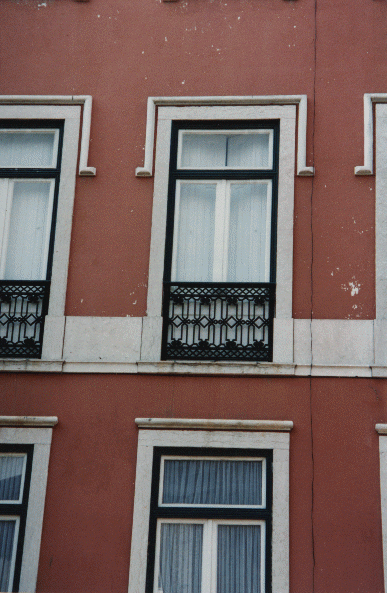
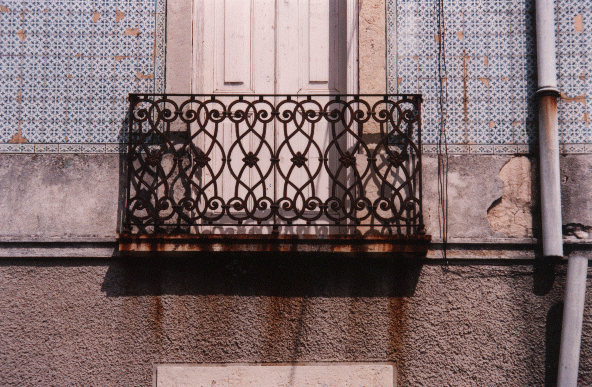


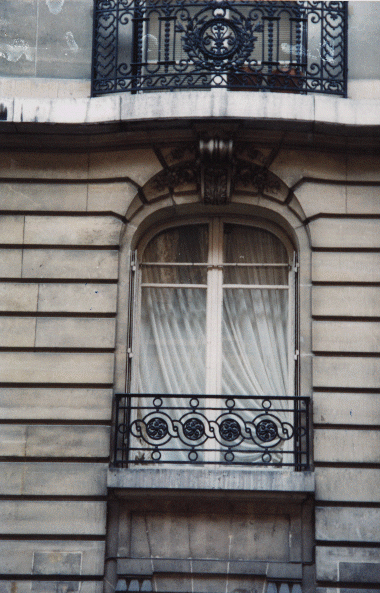



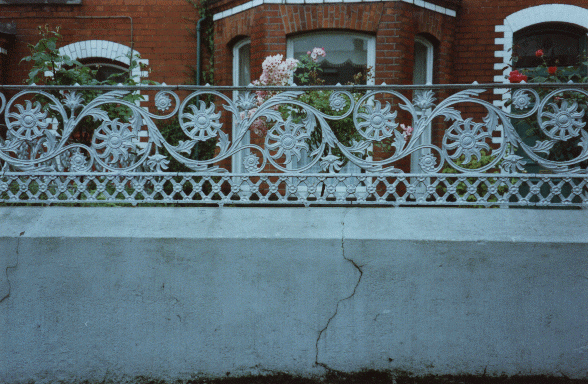
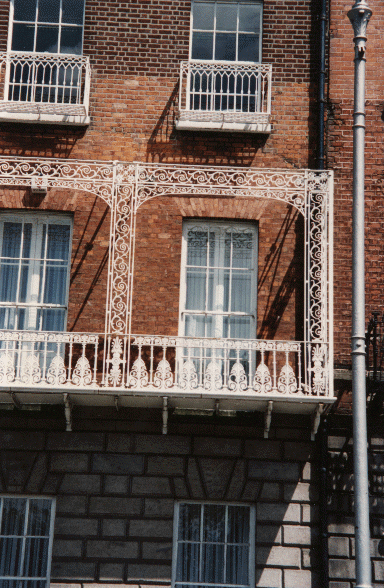
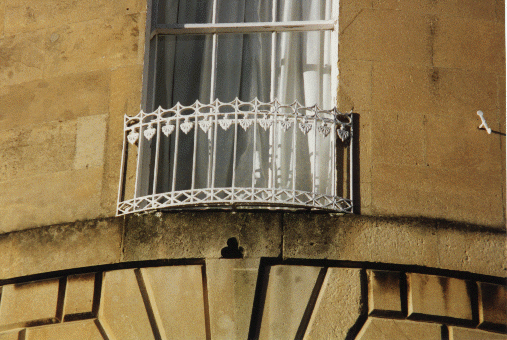
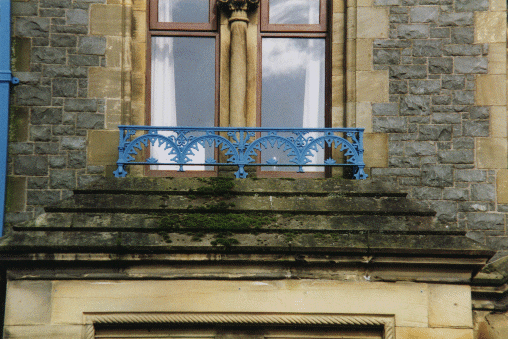
You can find cast iron patterns everywhere! Go out and have a look and see how many different ones you can find. But keep a special lookout for Type 7, it is very rare.
- Section 1: The Seven Frieze types
- Section 2: Australian Friezes
- Section 3: European and American Friezes