 Links to the NRICH website Home page

30 April (Primary), 1 May (Secondary)
Resources tagged with: Quadrilaterals
There are 41 results
Broad Topics > Angles, polygons, and geometrical proof > Quadrilaterals
Seeing Parallelograms
Players take it in turns to choose a dot on the grid. The winner is the first to have four dots that can be joined to form a parallelogram.



Rhombus It
Players take it in turns to choose a dot on the grid. The winner is the first to have four dots that can be joined to form a rhombus.

Parallelogram It
Players take it in turns to choose a dot on the grid. The winner is the first to have four dots that can be joined to form a parallelogram.
Seeing Squares
Players take it in turns to choose a dot on the grid. The winner is the first to have four dots that can be joined to form a square.

An Equilateral Triangular Problem
Take an equilateral triangle and cut it into smaller pieces. What can you do with them?

Completing Quadrilaterals
We started drawing some quadrilaterals - can you complete them?
Guess my Quad
How many questions do you need to identify my quadrilateral?
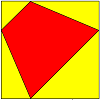
Quadrilaterals in a Square
What's special about the area of quadrilaterals drawn in a square?
Shape Draw
Use the information on these cards to draw the shape that is being described.
Poly Plug Rectangles
The computer has made a rectangle and will tell you the number of spots it uses in total. Can you find out where the rectangle is?
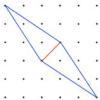
Opposite Vertices
Can you recreate squares and rhombuses if you are only given a side or a diagonal?
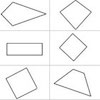
Quad Match
A task which depends on members of the group noticing the needs of others and responding.
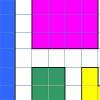
Making Rectangles
A task which depends on members of the group noticing the needs of others and responding.
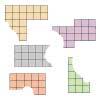
Torn Shapes
These rectangles have been torn. How many squares did each one have inside it before it was ripped?

Property Chart
A game in which players take it in turns to try to draw quadrilaterals (or triangles) with particular properties. Is it possible to fill the game grid?
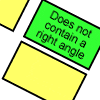
Shapely Pairs
A game in which players take it in turns to turn up two cards. If they can draw a triangle which satisfies both properties they win the pair of cards. And a few challenging questions to follow...

Quadrilaterals Game
A game for 2 or more people, based on the traditional card game Rummy.

Stringy Quads
This practical problem challenges you to make quadrilaterals with a loop of string. You'll need some friends to help!

Square It
Players take it in turns to choose a dot on the grid. The winner is the first to have four dots that can be joined to form a square.
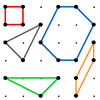
Transformations on a Pegboard
How would you move the bands on the pegboard to alter these shapes?
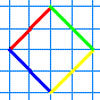
A Cartesian Puzzle
Find the missing coordinates which will form these eight quadrilaterals. These coordinates themselves will then form a shape with rotational and line symmetry.
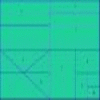
Rectangle Tangle
The large rectangle is divided into a series of smaller quadrilaterals and triangles. Can you untangle what fractional part is represented by each of the shapes?
Numerically Equal
Can you draw a square in which the perimeter is numerically equal to the area?

Quadrilaterals
How many DIFFERENT quadrilaterals can be made by joining the dots on the 8-point circle?

Bracelets
Investigate the different shaped bracelets you could make from 18 different spherical beads. How do they compare if you use 24 beads?

Seeing Rhombuses
Players take it in turns to choose a dot on the grid. The winner is the first to have four dots that can be joined to form a rhombus.

Quadrilaterals in a Hexagon
Which of these quadrilaterals can you find in the hexagon?

Triangle Transformation
Start with a triangle. Can you cut it up to make a rectangle?

Folding Flowers 1
Can you visualise what shape this piece of paper will make when it is folded?
What Am I?
Can you draw the shape that is being described by these cards?
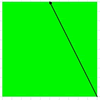
Cutting it Out
I cut this square into two different shapes. What can you say about the relationship between them?

Rabbit Run
Ahmed has some wooden planks to use for three sides of a rabbit run against the shed. What quadrilaterals would he be able to make with the planks of different lengths?

Fred the Class Robot
Billy's class had a robot called Fred who could draw with chalk held underneath him. What shapes did the pupils make Fred draw?


The Cyclic Quadrilateral
This gives a short summary of the properties and theorems of cyclic quadrilaterals and links to some practical examples to be found elsewhere on the site.

Making Rectangles, Making Squares
How many differently shaped rectangles can you build using these equilateral and isosceles triangles? Can you make a square?

Linkage
Four rods, two of length a and two of length b, are linked to form a kite. The linkage is moveable so that the angles change. What is the maximum area of the kite?

Hexagon Transformations
Can you cut a regular hexagon into two pieces to make a parallelogram? Try cutting it into three pieces to make a rhombus!
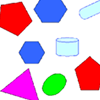
Part the Polygons
Draw three straight lines to separate these shapes into four groups - each group must contain one of each shape.
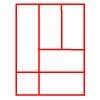
Is a Square a Rectangle?
How many rectangles can you find in this shape? Which ones are differently sized and which are 'similar'?

Cut and Make
Cut a square of paper into three pieces as shown. Now,can you use the 3 pieces to make a large triangle, a parallelogram and the square again?