 Links to the NRICH website Home page

30 April (Primary), 1 May (Secondary)
Resources tagged with: Experimental probability
There are 24 results
Broad Topics > Probability > Experimental probability
Odds and Evens Made Fair
In this follow-up to the problem Odds and Evens, we invite you to analyse a probability situation in order to find the general solution for a fair game.



Statistical Shorts
Can you decide whether these short statistical statements are always, sometimes or never true?

Who's the Winner?
When two closely matched teams play each other, what is the most likely result?

Mathsland National Lottery
Can you work out the probability of winning the Mathsland National Lottery?

Same Number!
If everyone in your class picked a number from 1 to 225, do you think any two people would pick the same number?
Last One Standing
Imagine a room full of people who keep flipping coins until they get a tail. Will anyone get six heads in a row?
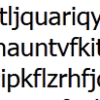
Probably a Code?
Is the regularity shown in this encoded message noise or structure?

Time to Evolve 2
How is the length of time between the birth of an animal and the birth of its great great ... great grandparent distributed?

Which Spinners?
Can you work out which spinners were used to generate the frequency charts?

Red or Black Spinner
A simple spinner that is equally likely to land on Red or Black. Useful if tossing a coin, dropping it, and rummaging about on the floor have lost their appeal. Needs a modern browser; if IE then at least version 9.

Investigating Epidemics
Simple models which help us to investigate how epidemics grow and die out.
The Derren Brown Coin Flipping Scam
Calculate probabilities associated with the Derren Brown coin scam in which he flipped 10 heads in a row.

X-dice
Explore these X-dice with numbers other than 1 to 6 on their faces. Which one is best?

Succession in Randomia
By tossing a coin one of three princes is chosen to be the next King of Randomia. Does each prince have an equal chance of taking the throne?

The Random World
Think that a coin toss is 50-50 heads or tails? Read on to appreciate the ever-changing and random nature of the world in which we live.

Taking Chances Extended
This article, for students and teachers, is mainly about probability, the mathematical way of looking at random chance.

The Mean Game
Edward Wallace based his A Level Statistics Project on The Mean Game. Each picks 2 numbers. The winner is the player who picks a number closest to the mean of all the numbers picked.

Game of PIG - Sixes
Can you beat Piggy in this simple dice game? Can you figure out Piggy's strategy, and is there a better one?

Stop or Dare
All you need for this game is a pack of cards. While you play the game, think about strategies that will increase your chances of winning.
Football World Cup Simulation
A maths-based Football World Cup simulation for teachers and students to use.

Thank Your Lucky Stars
A counter is placed in the bottom right hand corner of a grid. You toss a coin and move the star according to the following rules: ... What is the probability that you end up in the top left-hand corner of the grid?
Win or Lose?
A gambler bets half the money in his pocket on the toss of a coin, winning an equal amount for a head and losing his money if the result is a tail. After 2n plays he has won exactly n times. Has he more money than he started with?
Coin Tossing Games
You and I play a game involving successive throws of a fair coin. Suppose I pick HH and you pick TH. The coin is thrown repeatedly until we see either two heads in a row (I win) or a tail followed by a head (you win). What is the probability that you win?