 Links to the NRICH website Home page

30 April (Primary), 1 May (Secondary)
Resources tagged with: Fractions
There are 52 results
Broad Topics > Fractions, decimals, percentages, ratio and proportion > Fractions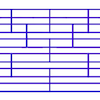
Tumbling Down
Watch this animation. What do you see? Can you explain why this happens?


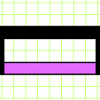
Extending Fraction Bars
Can you compare these bars with each other and express their lengths as fractions of the black bar?
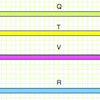
More Fraction Bars
What fraction of the black bar are the other bars? Have a go at this challenging task!

A4 Fraction Subtraction
This task offers opportunities to subtract fractions using A4 paper.

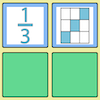
Matching Fractions
Can you find different ways of showing the same fraction? Try this matching game and see.

Jumping
After training hard, these two children have improved their results. Can you work out the length or height of their first jumps?
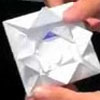
Bryony's Triangle
Watch the video to see how to fold a square of paper to create a flower. What fraction of the piece of paper is the small triangle?
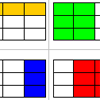
Fraction Match
A task which depends on members of the group noticing the needs of others and responding.

Making Longer, Making Shorter
Ahmed is making rods using different numbers of cubes. Which rod is twice the length of his first rod?
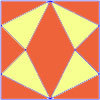
Fraction Fascination
This problem challenges you to work out what fraction of the whole area of these pictures is taken up by various shapes.
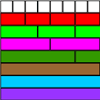
Fractional Wall
Using the picture of the fraction wall, can you find equivalent fractions?
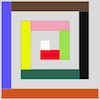
Cuisenaire Environment
An environment which simulates working with Cuisenaire rods.
Andy's Marbles
Andy had a big bag of marbles but unfortunately the bottom of it split and all the marbles spilled out. Use the information to find out how many there were in the bag originally.
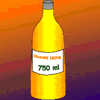
Orange Drink
A 750 ml bottle of concentrated orange squash is enough to make fifteen 250 ml glasses of diluted orange drink. How much water is needed to make 10 litres of this drink?
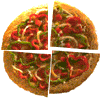
Fair Feast
Here is a picnic that Petros and Michael are going to share equally. Can you tell us what each of them will have?
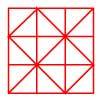
Fractional Triangles
Use the lines on this figure to show how the square can be divided into 2 halves, 3 thirds, 6 sixths and 9 ninths.

Halving
These pictures show squares split into halves. Can you find other ways?
Matching Fractions, Decimals and Percentages
Can you match pairs of fractions, decimals and percentages, and beat your previous scores?
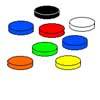
Fractions in a Box
The discs for this game are kept in a flat square box with a square hole for each. Use the information to find out how many discs of each colour there are in the box.
Rectangle Tangle
The large rectangle is divided into a series of smaller quadrilaterals and triangles. Can you untangle what fractional part is represented by each of the shapes?
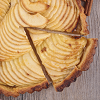
Pumpkin Pie Problem
Peter wanted to make two pies for a party. His mother had a recipe for him to use. However, she always made 80 pies at a time. Did Peter have enough ingredients to make two pumpkin pies?
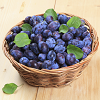
A Bowl of Fruit
Can you work out how many apples there are in this fruit bowl if you know what fraction there are?
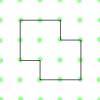
Happy Halving
Can you split each of the shapes below in half so that the two parts are exactly the same?
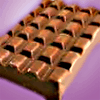
Chocolate
There are three tables in a room with blocks of chocolate on each. Where would be the best place for each child in the class to sit if they came in one at a time?
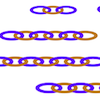
Linked Chains
Can you find ways to make twenty-link chains from these smaller chains? This gives opportunities for different approaches.
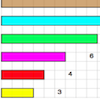
Fraction Lengths
Can you find combinations of strips of paper which equal the length of the black strip? If the length of the black is 1, how could you write the sum of the strips?

Exploring Fractions
This article, written for primary teachers, links to rich tasks which will help develop the underlying concepts associated with fractions and offers some suggestions for models and images that help support ideas around fractions.
Early Fraction Development
An article describing activities which will help develop young children's concept of fractions.
Snake Coils
This challenge asks you to imagine a snake coiling on itself.
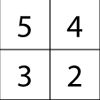
Magic Matrix
Find out why these matrices are magic. Can you work out how they were made? Can you make your own Magic Matrix?
Count the Beat
This article, written by Nicky Goulder and Samantha Lodge, reveals how maths and marimbas can go hand-in-hand! Why not try out some of the musical maths activities in your own classroom?

Once Upon a Time
Can you work out the height of Baby Bear's chair and whose bed is whose if all the things the three bears have are in the same proportions?
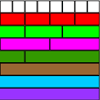
Fractions Made Faster
Use the fraction wall to compare the size of these fractions - you'll be amazed how it helps!

Rod Fractions
Pick two rods of different colours. Given an unlimited supply of rods of each of the two colours, how can we work out what fraction the shorter rod is of the longer one?
Fractions and Coins Game
Calculate the fractional amounts of money to match pairs of cards with the same value.
Teaching Fractions with Understanding: Part-whole Concept
Written for teachers, this article describes four basic approaches children use in understanding fractions as equal parts of a whole.
History of Fractions
Who first used fractions? Were they always written in the same way? How did fractions reach us here? These are the sorts of questions which this article will answer for you.

Light Blue - Dark Blue
Investigate the successive areas of light blue in these diagrams.

Smaller and Smaller
Can you predict, without drawing, what the perimeter of the next shape in this pattern will be if we continue drawing them in the same way?
Chocolate Bars
This is a game to be played on your own or with friends. Imagine you are having a party. Each person takes it in turns to stand behind the chair where they will get the most chocolate.
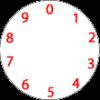
Dividing a Cake
Annie cut this numbered cake into 3 pieces with 3 cuts so that the numbers on each piece added to the same total. Where were the cuts and what fraction of the whole cake was each piece?
Fun Time
On Saturday, Asha and Kishan's grandad took them to a Theme Park. Use the information to work out how long were they in the theme park.

In the Money
One quarter of these coins are heads but when I turn over two coins, one third are heads. How many coins are there?

Red Balloons, Blue Balloons
Katie and Will have some balloons. Will's balloon burst at exactly the same size as Katie's at the beginning of a puff. How many puffs had Will done before his balloon burst?
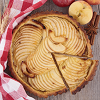
Pies
Grandma found her pie balanced on the scale with two weights and a quarter of a pie. So how heavy was each pie?
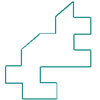
Same Shapes
How can these shapes be cut in half to make two shapes the same shape and size? Can you find more than one way to do it?
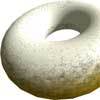
Doughnut
How can you cut a doughnut into 8 equal pieces with only three cuts of a knife?
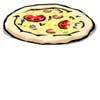
Pizza Portions
My friends and I love pizza. Can you help us share these pizzas equally?