 Links to the NRICH website Home page

30 April (Primary), 1 May (Secondary)
Resources tagged with: STEM - maths supporting SET
There are 17 results
Broad Topics > STEM mapping > STEM - maths supporting SET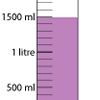
Place Your Orders
Can you rank these sets of quantities in order, from smallest to largest? Can you provide convincing evidence for your rankings?


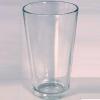
Fill Me Up
Can you sketch graphs to show how the height of water changes in different containers as they are filled?

Temperature
Is there a temperature at which Celsius and Fahrenheit readings are the same?
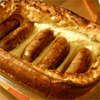
Toad in the Hole
Is it cheaper to cook a meal from scratch or to buy a ready meal? What difference does the number of people you're cooking for make?

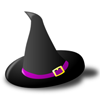
Witch's Hat
What shapes should Elly cut out to make a witch's hat? How can she make a taller hat?

Make Your Own Pencil Case
What shape would fit your pens and pencils best? How can you make it?
Flip Your Mat!
What shape and size of drinks mat is best for flipping and catching?
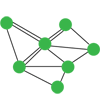
Investigating Epidemics
Simple models which help us to investigate how epidemics grow and die out.
Designing Table Mats
Formulate and investigate a simple mathematical model for the design of a table mat.

Troublesome Triangles
Many natural systems appear to be in equilibrium until suddenly a critical point is reached, setting up a mudslide or an avalanche or an earthquake. In this project, students will use a simple simulation game to investigate the properties of such systems.
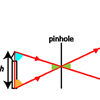
Pinhole Camera
Make your own pinhole camera for safe observation of the sun, and find out how it works.
Chocolate Cake
If I don't have the size of cake tin specified in my recipe, will the size I do have be OK?
Big and Small Numbers in the Living World
Work with numbers big and small to estimate and calculate various quantities in biological contexts.