 Links to the NRICH website Home page

30 April (Primary), 1 May (Secondary)
Resources tagged with: Practical activity
There are 60 results
Broad Topics > Physical and digital manipulatives > Practical activity
Constructing Triangles
Generate three random numbers to determine the side lengths of a triangle. What triangles can you draw?


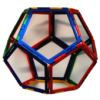
Which Solids Can We Make?
Interior angles can help us to work out which polygons will tessellate. Can we use similar ideas to predict which polygons combine to create semi-regular solids?
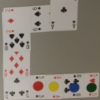
Sociable Cards
Move your counters through this snake of cards and see how far you can go. Are you surprised by where you end up?
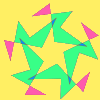
Attractive Rotations
Here is a chance to create some attractive images by rotating shapes through multiples of 90 degrees, or 30 degrees, or 72 degrees or...
Tower of Hanoi
The Tower of Hanoi is an ancient mathematical challenge. Working on the building blocks may help you to explain the patterns you notice.
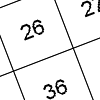
Factors and Multiples Game
A game in which players take it in turns to choose a number. Can you block your opponent?
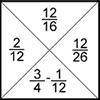
Fractions Jigsaw
A jigsaw where pieces only go together if the fractions are equivalent.
Cunning Card Trick
Delight your friends with this cunning trick! Can you explain how it works?
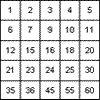
Factors and Multiples Puzzle
Using your knowledge of the properties of numbers, can you fill all the squares on the board?
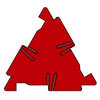
Triangles to Tetrahedra
Imagine you have an unlimited number of four types of triangle. How many different tetrahedra can you make?
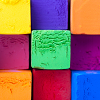
Nine Colours
Can you use small coloured cubes to make a 3 by 3 by 3 cube so that each face of the bigger cube contains one of each colour?
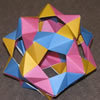
Modular Origami Polyhedra
These models have appeared around the Centre for Mathematical Sciences. Perhaps you would like to try to make some similar models of your own.

Tangram Pictures
Use the tangram pieces to make our pictures, or to design some of your own!
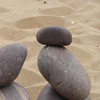
Well Balanced
Exploring balance and centres of mass can be great fun. The resulting structures can seem impossible. Here are some images to encourage you to experiment with non-breakable objects of your own.

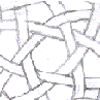
Celtic Knotwork Patterns
This article for pupils gives an introduction to Celtic knotwork patterns and a feel for how you can draw them.
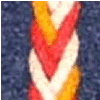
Plaiting and Braiding
This article for students gives some instructions about how to make some different braids.
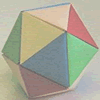
Paper Folding - Models of the Platonic Solids
A description of how to make the five Platonic solids out of paper.
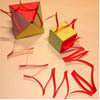
Making Maths: Walking Through a Playing Card?
It might seem impossible but it is possible. How can you cut a playing card to make a hole big enough to walk through?
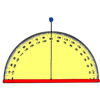
Making Maths: Clinometer
You can use a clinometer to measure the height of tall things that you can't possibly reach to the top of, Make a clinometer and use it to help you estimate the heights of tall objects.
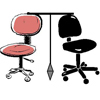
Making Maths: Make a Pendulum
Galileo, a famous inventor who lived about 400 years ago, came up with an idea similar to this for making a time measuring instrument. Can you turn your pendulum into an accurate minute timer?
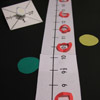
Making Maths: Snake Pits
A game to make and play based on the number line.
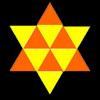
Making Maths: Equilateral Triangle Folding
Make an equilateral triangle by folding paper and use it to make patterns of your own.
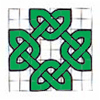
Making Maths: Celtic Knot Tiles
Make some celtic knot patterns using tiling techniques
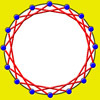
Making Maths: String and Circles
You could use just coloured pencils and paper to create this design, but it will be more eye-catching if you can get hold of hammer, nails and string.
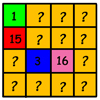
Making Maths: Double-sided Magic Square
Make your own double-sided magic square. But can you complete both sides once you've made the pieces?
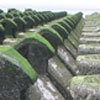
Sea Defences
These are pictures of the sea defences at New Brighton. Can you work out what a basic shape might be in both images of the sea wall and work out a way they might fit together?
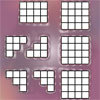
Back to the Practical?
In this article for teachers, Bernard uses some problems to suggest that once a numerical pattern has been spotted from a practical starting point, going back to the practical can help explain why the pattern occurs.
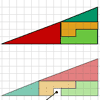
Muggles, Logo and Gradients
Logo helps us to understand gradients of lines and why Muggles Magic is not magic but mathematics. See the problem Muggles magic.
First Forward Into Logo 3: Repeat REPEAT
More Logo for beginners. Now learn more about the REPEAT command.
First Forward Into Logo 12: Puzzling Sums
Can you puzzle out what sequences these Logo programs will give? Then write your own Logo programs to generate sequences.
First Forward Into Logo 11: Sequences
This part introduces the use of Logo for number work. Learn how to use Logo to generate sequences of numbers.
First Forward Into Logo 8: More about Variables
Write a Logo program, putting in variables, and see the effect when you change the variables.

First Forward Into Logo 5: Pen Up, Pen Down
Learn about Pen Up and Pen Down in Logo
First Forward Into Logo 9: Stars
Turn through bigger angles and draw stars with Logo.
First Forward Into Logo 7: Angles of Polygons
More Logo for beginners. Learn to calculate exterior angles and draw regular polygons using procedures and variables.
First Forward Into Logo 6: Variables and Procedures
Learn to write procedures and build them into Logo programs. Learn to use variables.
First Forward Into Logo 4: Circles
Learn how to draw circles using Logo. Wait a minute! Are they really circles? If not what are they?
First Forward Into Logo 2: Polygons
This is the second in a twelve part introduction to Logo for beginners. In this part you learn to draw polygons.
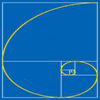
Whirling Fibonacci Squares
Draw whirling squares and see how Fibonacci sequences and golden rectangles are connected.
First Forward Into Logo 10: Count up - Count Down
What happens when a procedure calls itself?
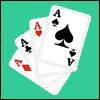
The Best Card Trick?
Time for a little mathemagic! Choose any five cards from a pack and show four of them to your partner. How can they work out the fifth?
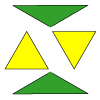
Making Rectangles, Making Squares
How many differently shaped rectangles can you build using these equilateral and isosceles triangles? Can you make a square?
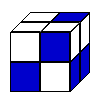
Cubic Conundrum
Which of the following cubes can be made from these nets?
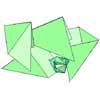
Getting an Angle
How can you make an angle of 60 degrees by folding a sheet of paper twice?
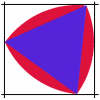
Rolling Triangle
The triangle ABC is equilateral. The arc AB has centre C, the arc BC has centre A and the arc CA has centre B. Explain how and why this shape can roll along between two parallel tracks.
More Marbles
I start with a red, a blue, a green and a yellow marble. I can trade any of my marbles for three others, one of each colour. Can I end up with exactly two marbles of each colour?
Marbles
I start with a red, a green and a blue marble. I can trade any of my marbles for two others, one of each colour. Can I end up with five more blue marbles than red after a number of such trades?