 Links to the NRICH website Home page

30 April (Primary), 1 May (Secondary)
Patterns and Sequences - Stage 4
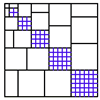
Picture Story


Can you see how this picture illustrates the formula for the sum of the first six cube numbers?

Attractive Tablecloths
Charlie likes tablecloths that use as many colours as possible, but insists that his tablecloths have some symmetry. Can you work out how many colours he needs for different tablecloth designs?
Painted Cube
Imagine a large cube made from small red cubes being dropped into a pot of yellow paint. How many of the small cubes will have yellow paint on their faces?

Mystic Rose
Use the animation to help you work out how many lines are needed to draw mystic roses of different sizes.

Slick Summing
Watch the video to see how Charlie works out the sum. Can you adapt his method?
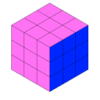
Partly Painted Cube
Jo made a cube from some smaller cubes, painted some of the faces of the large cube, and then took it apart again. 45 small cubes had no paint on them at all. How many small cubes did Jo use?

A Little Light Thinking
Here is a machine with four coloured lights. Can you make two lights switch on at once? Three lights? All four lights?
Steel Cables
Some students have been working out the number of strands needed for different sizes of cable. Can you make sense of their solutions?


Patterns and Sequences - Short Problems
A collection of short problems on patterns and sequences.

Diagonals
How many diagonals does a regular icosagon (20 sides) have?