

Coloured Squares


Use the clues to colour each square.
Problem
Use these clues to colour each shape:
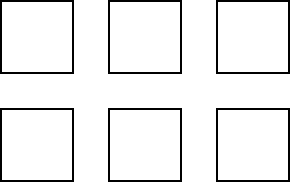
- Blue is between green and red
- Orange is below green
- Yellow is to the left of both purple and orange
Getting Started
Which square could be blue? How do you know?
How does the second clue help?
Try colouring the squares, or use coloured counters. Does your arrangement fit the clues?
Student Solutions
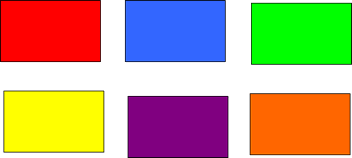
Daman at St.Joseph's School in Vancouver, Canada; David from Tithe Barn Primary School and Alice agreed on the answer to Coloured Squares. David explains how he tackled it:
I did this puzzle by working through the clues one by one. I used multilink to represent the colours and used pink instead of purple.
I thought at first that the order on one of the lines was: green, orange, blue. Then I knew that orange was underneath so I did that too. Then I knew that yellow was to the left of purple and orange so I altered it completely. I made the top row: red, blue, green and underneath: yellow, purple, orange. Here is the image that David sent:
Teachers' Resources
Coloured Squares
Use these clues to colour each shape:
- Blue is between green and red
- Orange is below green
- Yellow is to the left of both purple and orange
Using NRICH Tasks Richly describes ways in which teachers and learners can work with NRICH tasks in the classroom.
Why do this problem?
Possible approach
Key questions
Possible extension
Possible support