 Links to the NRICH website Home page

30 April (Primary), 1 May (Secondary)
Resources tagged with: Sorting, processing and representing data
There are 67 NRICH Mathematical resources connected to Sorting, processing and representing data, you may find related items under Handling, processing and representing data.
Broad Topics > Handling, processing and representing data > Sorting, processing and representing data
Estimating Time
How well can you estimate 10 seconds? Investigate with our timing tool.



What's the Weather Like?
With access to weather station data, what interesting questions can you investigate?

Perception Versus Reality
Infographics are a powerful way of communicating statistical information. Can you come up with your own?

Picturing the World
How can we make sense of national and global statistics involving very large numbers?

Olympic Triathlon
Is it the fastest swimmer, the fastest runner or the fastest cyclist who wins the Olympic Triathlon?

Going for Gold
Looking at the 2012 Olympic Medal table, can you see how the data is organised? Could the results be presented differently to give another nation the top place?

Our Sports
This problem explores the range of events in a sports day and which ones are the most popular and attract the most entries.

The Games' Medals
Can you see who the gold medal winner is? What about the silver medal winner and the bronze medal winner?

Which List Is Which?
Six samples were taken from two distributions but they got muddled up. Can you work out which list is which?
If the World Were a Village
This activity is based on data in the book 'If the World Were a Village'. How will you represent your chosen data for maximum effect?

Sticky Data
You'll need to work in a group on this problem. Use your sticky notes to show the answer to questions such as 'how many girls are there in your group?'.

The Domesday Project
Take a look at these data collected by children in 1986 as part of the Domesday Project. What do they tell you? What do you think about the way they are presented?

Data Shapes
Sara and Will were sorting some pictures of shapes on cards. "I'll collect the circles," said Sara. "I'll take the red ones," answered Will. Can you see any cards they would both want?
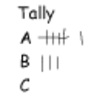
Class 5's Names
Class 5 were looking at the first letter of each of their names. They created different charts to show this information. Can you work out which member of the class was away on that day?

Who's the Best?
Which countries have the most naturally athletic populations?

Sorting Logic Blocks
This activity focuses on similarities and differences between shapes.

Guess the Houses
This task depends on learners sharing reasoning, listening to opinions, reflecting and pulling ideas together.

Planning a School Trip
You are organising a school trip and you need to write a letter to parents to let them know about the day. Use the cards to gather all the information you need.

Reaction Timer
This problem offers you two ways to test reactions - use them to investigate your ideas about speeds of reaction.

Sort the Street
Sort the houses in my street into different groups. Can you do it in any other ways?

Substitution Cipher
Find the frequency distribution for ordinary English, and use it to help you crack the code.
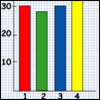
How Big Are Classes 5, 6 and 7?
Use the two sets of data to find out how many children there are in Classes 5, 6 and 7.

Ladybird Count
Some children were playing a game. Make a graph or picture to show how many ladybirds each child had.

Substitution Transposed
Substitution and Transposition all in one! How fiendish can these codes get?

Secondary Cipher Challenge Part 1
Here is the start of a six-part challenge. Can you get to the end and crack the final message?

May the Best Person Win
How can people be divided into groups fairly for events in the Paralympics, for school sports days, or for subject sets?
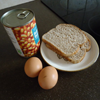
Tom Learns to Cook
If Tom wants to learn to cook his favourite supper, he needs to make a schedule so that everything is ready at the same time.
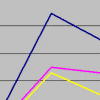
Charting More Success
Can you make sense of the charts and diagrams that are created and used by sports competitors, trainers and statisticians?

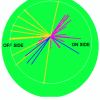
Charting Success
Can you make sense of the charts and diagrams that are created and used by sports competitors, trainers and statisticians?

Retiring to Paradise
When Charlie retires, he's looking forward to the quiet life, whereas Alison wants a busy and exciting retirement. Can you advise them on where they should go?

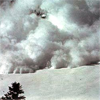
Avalanche!
Investigate how avalanches occur and how they can be controlled

Bio Graphs
What biological growth processes can you fit to these graphs?
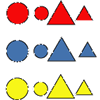
Logic Block Collections
What do you think is the same about these two Logic Blocks? What others do you think go with them in the set?
Sorting Numbers
Can you sort numbers into sets? Can you give each set a name?
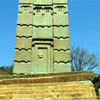
Zin Obelisk
In the ancient city of Atlantis a solid rectangular object called a Zin was built in honour of the goddess Tina. Your task is to determine on which day of the week the obelisk was completed.

Data Matching
Use your skill and judgement to match the sets of random data.

Enriching Data Handling
This article for teachers looks at some suggestions taken from the NRICH website that offer a broad view of data and ask some more probing questions about it.
Meaningful Statistics
This article for teachers describes an activity which encourages meaningful data collection, display and interpretation.
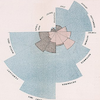
Florence Nightingale - the Compassionate Mathematician
Florence Nightingale may be well known for her role as a nurse, but she was also an excellent mathematician, collecting and analysing data to help improve hospital conditions.

Butterfly Cards
Four children were sharing a set of twenty-four butterfly cards. Are there any cards they all want? Are there any that none of them want?

Coordinates and Descartes
Have you ever wondered how maps are made? Or perhaps who first thought of the idea of designing maps? We're here to answer these questions for you.

What Does it Say to You?
Written for teachers, this article discusses mathematical representations and takes, in the second part of the article, examples of reception children's own representations.

You Never Get a Six
Charlie thinks that a six comes up less often than the other numbers on the dice. Have a look at the results of the test his class did to see if he was right.

Dining Ducks
Use the information about the ducks on a particular farm to find out which of the statements about them must be true.
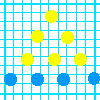
Graphing Number Patterns
Does a graph of the triangular numbers cross a graph of the six times table? If so, where? Will a graph of the square numbers cross the times table too?

Football Crazy Hockey Mad
In a league of 5 football teams which play in a round robin tournament show that it is possible for all five teams to be league leaders.

Hoops/rope
Ideas for practical ways of representing data such as Venn and Carroll diagrams.