

This is part of our Secondary Curriculum collection of favourite rich tasks arranged by topic.

Days and Dates


Investigate how you can work out what day of the week your birthday will be on next year, and the year after...

Summing Consecutive Numbers
15 = 7 + 8 and 10 = 1 + 2 + 3 + 4. Can you say which numbers can be expressed as the sum of two or more consecutive integers?
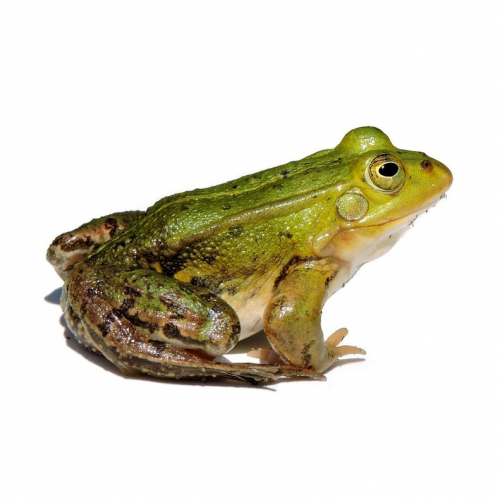
Frogs
How many moves does it take to swap over some red and blue frogs? Do you have a method?

Picturing Triangular Numbers
What do you notice about the sum of two identical triangular numbers?

Picturing Square Numbers
Square numbers can be represented as the sum of consecutive odd numbers. What is the sum of 1 + 3 + ..... + 149 + 151 + 153?

Elevenses
How many pairs of numbers can you find that add up to a multiple of 11? Do you notice anything interesting about your results?

Shifting Times Tables
Can you find a way to identify times tables after they have been shifted up or down?

Charlie's Delightful Machine
Here is a machine with four coloured lights. Can you develop a strategy to work out the rules controlling each light?

What Numbers Can We Make?
Imagine we have four bags containing a large number of 1s, 4s, 7s and 10s. What numbers can we make?
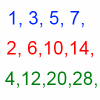
Odds, Evens and More Evens
Alison, Bernard and Charlie have been exploring sequences of odd and even numbers, which raise some intriguing questions...

Beach Huts
Can you figure out how sequences of beach huts are generated?

Growing Surprises
Can you find the connections between linear and quadratic patterns?

1 Step 2 Step
Liam's house has a staircase with 12 steps. He can go down the steps one at a time or two at time. In how many different ways can Liam go down the 12 steps?

Seven Squares - Group-Worthy Task

Coordinate Patterns
Charlie and Alison have been drawing patterns on coordinate grids. Can you picture where the patterns lead?

Squares in Rectangles
A 2 by 3 rectangle contains 8 squares and a 3 by 4 rectangle contains 20 squares. What sizes of rectangle contain exactly 100 squares? Can you find them all?

Triangle Numbers
Take a look at the multiplication square. The first eleven triangle numbers have been identified. Can you see a pattern? Does the pattern continue?
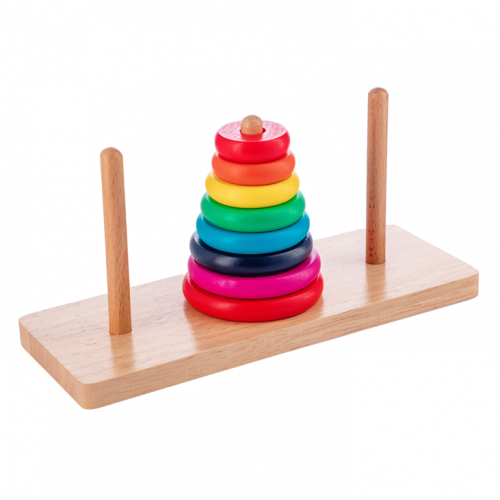
Tower of Hanoi
The Tower of Hanoi is an ancient mathematical challenge. Working on the building blocks may help you to explain the patterns you notice.

Seven Squares
Watch these videos to see how Phoebe, Alice and Luke chose to draw 7 squares. How would they draw 100?

What Numbers Can We Make Now?
Imagine we have four bags containing numbers from a sequence. What numbers can we make now?

You may also be interested in this collection of activities from the STEM Learning website, that complement the NRICH activities above.